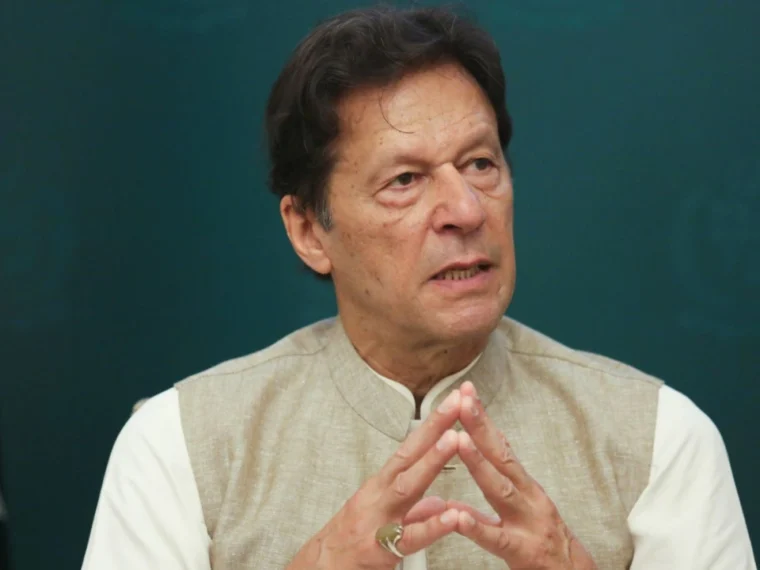
Imran Khan health: A fresh political controversy has erupted in Pakistan over the health of former Prime Minister Imran Khan, with Interior Minister Mohsin Naqvi accusing Khan’s sister, Aleema Khanum, of politicising his medical condition and obstructing timely treatment.
The dispute has intensified tensions between the government and the opposition party, Pakistan Tehreek-e-Insaf (PTI), as questions mount over the former premier’s eye ailment and the circumstances surrounding his medical care while in custody.
Allegations of Delayed Medical Examination
Speaking at a press conference, Mohsin Naqvi alleged that Aleema Khanum interfered with the medical process after Khan received his first anti-VEGF eye injection. According to the interior minister, doctors were scheduled to visit Adiala Jail on February 12 to conduct follow-up tests. However, he claimed the visit was delayed by three days due to Aleema’s intervention, and the medical team eventually examined Khan on February 15.
Naqvi further stated that when the doctors went to assess Khan’s condition, PTI Chairman Gohar Ali Khan was invited to attend but chose not to be present. Despite this, he said, both Gohar and Senate Opposition Leader Mahmood Khan Achakzai were later briefed at the Pakistan Institute of Medical Sciences (PIMS) in Islamabad.
The minister maintained that the government-appointed medical board held a detailed discussion with Khan’s personal doctors and described the treatment as satisfactory.
Hospital Transfer ‘Only on Medical Advice’
Addressing calls from PTI leaders and Khan’s family to shift him to a hospital, Naqvi said the government had no objection to transferring the former prime minister if recommended by doctors. He stressed that any hospital admission would be strictly based on medical advice and not political pressure.
Naqvi defended the administration’s handling of the matter, explaining that while the anti-VEGF injection could have been administered within the jail premises, authorities opted to take Khan to PIMS to ensure a secure and controlled environment.
Throughout the briefing, the interior minister accused Aleema Khanum of using her brother’s illness to build a political narrative. He also alleged that she instructed party leaders not to publicly commend the medical treatment, claiming such praise would weaken their stance against the government.
Timeline Contradictions Surface
However, Naqvi’s version of events has drawn scrutiny due to apparent inconsistencies in the timeline. The alleged missed examination on February 12 coincided with proceedings at the Supreme Court of Pakistan, where court-appointed amicus curiae Salman Safdar submitted a report stating that Imran Khan had only 15 percent vision in his right eye.
Following that hearing, the Supreme Court directed the government to constitute a medical board to evaluate Khan’s health and submit a detailed report. Notably, the medical team was formed on February 14 — two days after the supposed missed jail visit — raising questions about the accuracy of the interior minister’s claims.
Further discrepancies have emerged regarding the duration and substance of discussions between government doctors and Khan’s personal medical team. While Naqvi asserted that the meeting lasted 45 minutes and that the treatment was described as “very good,” reports suggest the official health document recorded a 25-minute interaction without explicitly endorsing the treatment quality.
Government Rejects Health Crisis Claims
Naqvi also dismissed reports suggesting that Khan had lost 85 percent of vision in his right eye or that prison conditions were substandard. He claimed that facilities provided to the former premier were adequate and in line with regulations.
Expressing willingness to increase transparency, Naqvi said he would like to allow journalists access to the jail to observe the conditions firsthand, although he acknowledged that granting such permission was not solely within his authority.
Political Fallout
The controversy has added another layer of tension to Pakistan’s already charged political climate. Supporters of Imran Khan argue that concerns over his health deserve serious attention, while government officials insist that proper medical procedures are being followed.
As conflicting narratives continue to surface, the issue has evolved from a medical concern into a broader political confrontation. With court oversight now involved and public interest growing, the debate over Khan’s health is likely to remain a flashpoint in Pakistan’s political landscape in the coming weeks.