
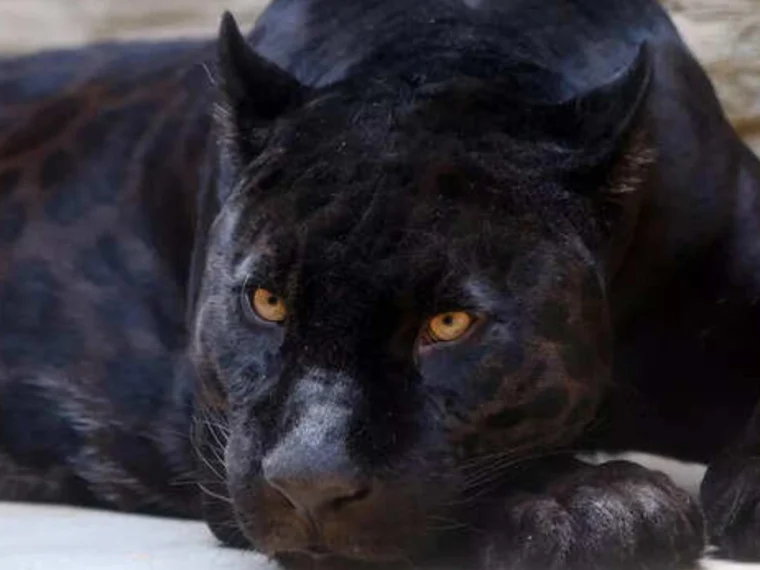
Black panthers are not a separate species but melanistic leopards — their dark coat the result of a genetic trait called melanism. In India, spotting one is less about wildlife tourism and more about witnessing something rare and deeply secretive. These shadow-like predators move silently, blending into dense forests, appearing and disappearing without warning. Their presence is not just thrilling — it signals the health of the ecosystem they inhabit.
The Truth Behind Black Panthers in India
Contrary to popular belief, black panthers are not mythical. They are leopards whose darker pigmentation helps them thrive in dense, shaded habitats. Melanism is more common in moist, evergreen and thick forest landscapes, where darkness becomes an evolutionary advantage. In India, certain forests create ideal conditions for these elusive cats, making them rare to see but not necessarily rare in existence.
1. Kabini Forest Reserve
Kabini has become almost legendary among wildlife enthusiasts for repeated black panther sightings. With thick vegetation, water bodies, and abundant prey, it offers perfect camouflage and hunting grounds. A melanistic leopard here even earned near-mythical status among photographers. Early mornings and dusk provide the best opportunities, when long shadows blur movement into mystery.
2. Bhadra Wildlife Sanctuary
Less commercial and deeply serene, Bhadra’s mix of moist deciduous and evergreen forest creates ideal leopard habitat. Black panther sightings are rare and fleeting, often near water sources or forest tracks. The unpredictability is part of its charm — wildlife here exists on its own terms.
3. Nagarhole National Park
Dense undergrowth and towering trees make Nagarhole an ancient-feeling landscape. While sightings are uncommon, forest staff and trackers confirm melanistic leopards inhabit the region. The park’s strong prey base and relatively protected ecosystem make it a critical habitat for large predators.
4. Tadoba Andhari Tiger Reserve
Famous for tigers, Tadoba has also reported black panther sightings, particularly in buffer zones. Unlike darker rainforests, its dry deciduous terrain makes such sightings striking and surreal. The contrast proves that melanistic leopards adapt wherever standard leopards thrive.
5. Dandeli Anshi Tiger Reserve
Rugged terrain, bamboo thickets, and heavy canopy cover define Dandeli. The reserve’s connected forest corridors allow free movement of predators. Riverbanks and dense patches occasionally become sites of rare sightings. Connectivity here plays a crucial role in long-term survival.
6. Satpura Tiger Reserve
Satpura offers a quieter, more immersive safari experience. With ravines, sal forests, and rocky outcrops, it provides suitable habitat, though sightings are extremely rare. Even without seeing one, knowing such a predator may be watching from the shadows changes the entire forest experience.
7. Silent Valley National Park
One of India’s most untouched rainforests, Silent Valley lives up to its name. While confirmed sightings are scarce, its dense evergreen ecosystem supports leopards, making melanism possible. Here, the mystery itself becomes part of conservation’s value.
Why These Forests Matter
Black panthers survive only where ecosystems remain balanced — where prey species thrive and human disturbance is controlled. Their presence indicates ecological strength. Protecting them means safeguarding entire food chains and forest systems.
The Emotional Weight of a Sighting
Those who have seen a black panther often describe the moment as surreal and humbling. It is not loud or dramatic. The animal appears like a moving shadow and vanishes just as quickly. That fleeting presence leaves a lasting imprint.
Conservation Over Curiosity
Growing fame brings risks. Increased tourism, social media pressure, and unethical tracking can disturb wildlife. Forest authorities emphasize responsible safaris and maintaining safe distances. Protecting black panthers means respecting their need to remain unseen.
Evolution in Action
Melanism provides camouflage advantages in dense forests. It enhances hunting success and survival. For the black panther, darkness is not symbolism — it is adaptation shaped by natural selection.
Beyond Tourism
If these forests decline, black panthers will not simply relocate — they will disappear. Conservation requires protecting habitats, prey species, water systems, and forest communities. These animals are not just wildlife icons; they are ecological indicators.
Black panthers do not seek attention. They exist quietly, powerfully, and independently. In a world driven by visibility, they remind us that survival sometimes depends on remaining in the shadows. India’s forests still hold these living mysteries — not for spectacle, but as proof that wildness endures.