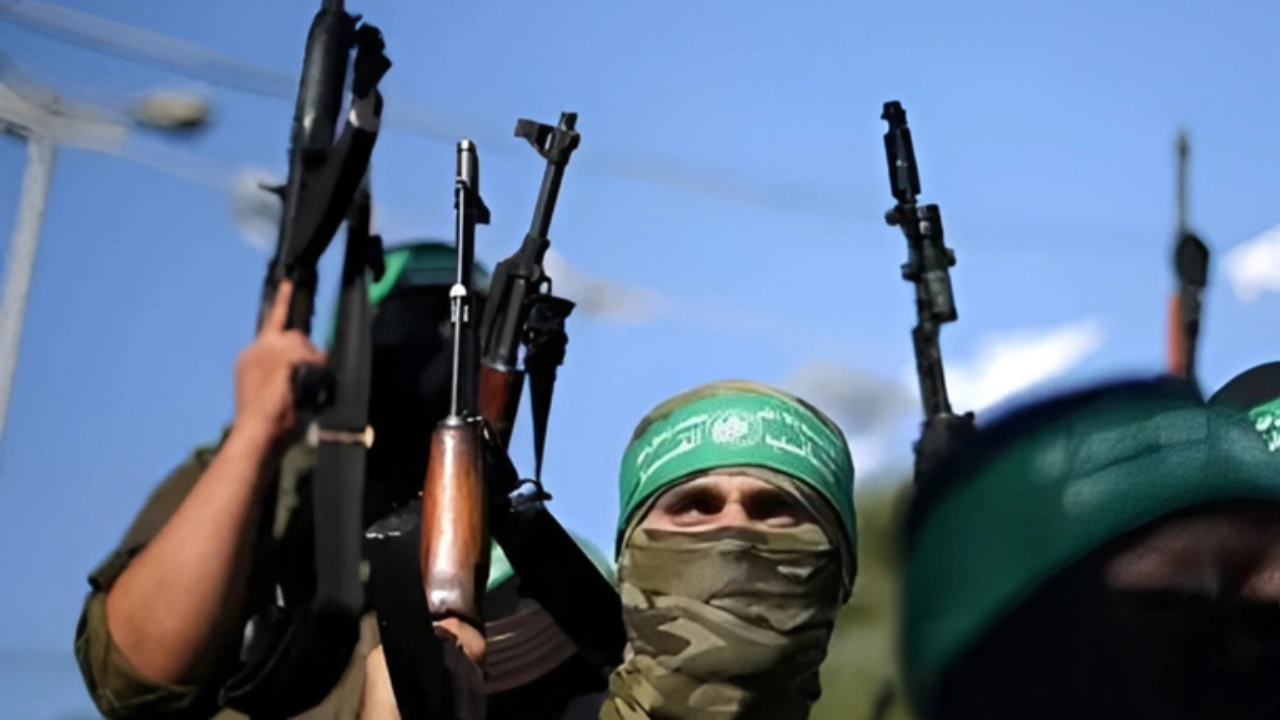
A fresh revelation has raised alarm across international security circles after a senior Lashkar-e-Taiba (LeT) commander based in Pakistan openly acknowledged operational links with Hamas, the Gaza-based militant organisation. The admission points to the possible emergence of a wider transnational terror alliance, one that could significantly complicate counterterrorism efforts in South Asia, the Middle East, and beyond.
In a recently surfaced video, Faisal Nadeem, a key figure associated with Pakistan’s Markazi Muslim League — widely regarded as the political front of LeT — confirmed that he met Hamas leadership in Doha in 2024. This acknowledgment has added weight to long-standing intelligence assessments suggesting coordination between Pakistan-based militant groups and Hamas, both of which are designated terrorist organisations by the United States.
In a recent video, Faisal Nadeem , PMML/LeT chief of Sindh admits meeting Hamas members in Qatar. pic.twitter.com/iDptoQ7NCB
— THE UNKNOWN MAN (@Theunk5555) January 27, 2026
Growing Evidence of Cross-Regional Cooperation
According to a detailed report by the US-based Middle East Media Research Institute (MEMRI), the relationship between Hamas and Pakistan-origin terror outfits such as Lashkar-e-Taiba and Jaish-e-Mohammad is no longer speculative. Instead, it appears to be evolving into an organised partnership aimed at expanding operational reach, sharing tactical knowledge, and aligning ideological objectives.
MEMRI’s findings indicate that leaders and operatives from these groups have held multiple meetings to explore avenues of cooperation. These interactions reportedly include discussions on logistics, training, propaganda coordination, and broader strategic collaboration. Security analysts warn that such a nexus could facilitate the transfer of expertise from one conflict zone to another, thereby escalating violence in already volatile regions.
Political Context and International Concerns
The revelation comes at a sensitive geopolitical moment. On January 15, 2026, a US-led intergovernmental body known as the Board of Peace was formally established with the stated objective of promoting stability, restoring lawful governance, and securing long-term peace in conflict-affected areas of Gaza. US President Donald Trump assumed the role of chair of the organisation.
Just days later, on January 18, President Trump invited Pakistani Prime Minister Shehbaz Sharif to join the Board of Peace. Pakistan reportedly accepted the proposal, with Sharif’s government expressing willingness to participate in international peace initiatives related to Gaza.
However, critics argue that Pakistan’s domestic policies directly contradict the spirit of such commitments. Despite being a US-designated “major non-NATO ally,” Pakistan continues to allow Hamas representatives to operate openly within its borders. These individuals have been seen attending public gatherings, participating in rallies, and forging ties with local militant organisations — activities that undermine Western efforts to diplomatically and financially isolate Hamas.
Questions Over Pakistan’s Counterterrorism Role
The apparent tolerance of Hamas-linked activities in Pakistan has revived debate in Washington and other Western capitals over Islamabad’s role in global counterterrorism efforts. Analysts point out that Pakistan’s long history of nurturing militant proxies, particularly those targeting India, raises serious doubts about its reliability as a strategic partner.
The LeT–Hamas connection is being viewed by many as an extension of this policy. Lashkar-e-Taiba, responsible for several major terror attacks in India, including the 2008 Mumbai attacks, has long been accused of operating with implicit state support. Hamas, meanwhile, continues to wage violent campaigns against Israel. The convergence of these two groups signals the potential formation of a broader ideological and operational front against India, Israel, and Western interests.
In a recent video, Faisal Nadeem , PMML/LeT chief of Sindh admits meeting Hamas members in Qatar. pic.twitter.com/iDptoQ7NCB
— THE UNKNOWN MAN (@Theunk5555) January 27, 2026
Regional and Global Security Implications
Security agencies in India, Israel, and the United States are closely monitoring developments following Nadeem’s confession. Indian officials, in particular, see the emerging nexus as a direct threat. Pakistan-based terror outfits have historically focused on India, and any alliance with Hamas could provide them with new resources, funding channels, and international exposure.
The MEMRI report highlights footage from a January 2026 gathering in Gujranwala, Pakistan, allegedly linked to LeT. The event featured senior Hamas representative Naji Zaheer alongside known LeT operative Rashid Ali Sandhu. Such public displays of association suggest that the relationship between these groups is becoming increasingly open and institutionalised.
Further deepening concerns is the reported presence of Saifullah Kesari — identified as the mastermind behind the April 2025 Pahalgam terror attack — alongside Faisal Nadeem during meetings in Doha. Nadeem himself confirmed this association, reinforcing fears that planners of attacks in India are actively networking with Middle Eastern militant leaders.
A Pattern, Not an Isolated Incident
Experts caution that the LeT–Hamas linkage should not be seen as an isolated development. Instead, it reflects a broader trend of militant organisations seeking cross-regional alliances to counter international pressure. By pooling resources and coordinating narratives, such groups aim to sustain relevance, evade sanctions, and amplify their impact.
The situation also places the United States in a difficult position. While Washington seeks Pakistan’s cooperation in stabilising regions like Gaza, continued tolerance of Hamas-linked activities could force a reassessment of Pakistan’s privileged status as a major non-NATO ally. Some policymakers argue that maintaining this designation without stricter accountability risks sending the wrong message about the consequences of supporting or sheltering extremist groups.
Looking Ahead
As evidence of coordination between Lashkar-e-Taiba and Hamas continues to mount, the international community faces a complex challenge. Disrupting such networks will require not only intelligence sharing and financial sanctions, but also sustained diplomatic pressure on states accused of enabling militant activities.
For India and Israel, the emerging nexus represents a convergence of long-standing threats. For the United States and its allies, it raises urgent questions about alliances, counterterrorism priorities, and the effectiveness of existing strategies to combat global extremism. What remains clear is that Faisal Nadeem’s admission has pulled back the curtain on a developing terror partnership with potentially far-reaching consequences.