Pakistan’s military has claimed it killed at least 70 militants in a series of early-morning strikes along the Afghanistan border, escalating tensions between Islamabad and Kabul. Officials said the operations targeted hideouts of Pakistani militant groups allegedly responsible for recent attacks inside Pakistan.
Deputy Interior Minister Talal Chaudhry told Geo News that a minimum of 70 militants were killed in what he described as precise operations. Pakistan’s state-run media later reported that the death toll had risen to 80. However, no independent verification or evidence has been publicly presented to support the claims.
Pakistan’s Information Minister Attaullah Tarar stated on X that the military conducted “intelligence-based, selective operations” against seven camps belonging to the Pakistani Taliban, also known as the Tehrik-i-Taliban Pakistan (TTP), as well as affiliated groups. He added that an affiliate of the Islamic State group was also among the targets.
Afghan Officials Report Civilian Casualties
Afghan authorities strongly condemned the strikes. The Ministry of Defense Afghanistan said that multiple civilian areas in Nangarhar and Paktika provinces were hit, including a religious madrassa and residential homes. The ministry called the strikes a violation of Afghanistan’s sovereignty and airspace.
Afghan government spokesperson Zabihullah Mujahid posted that dozens of civilians, including women and children, were killed or wounded in the attacks. Meanwhile, Mawlawi Fazl Rahman Fayyaz, a provincial official with the Afghan Red Crescent Society in Nangarhar, reported at least 18 deaths and several injuries.
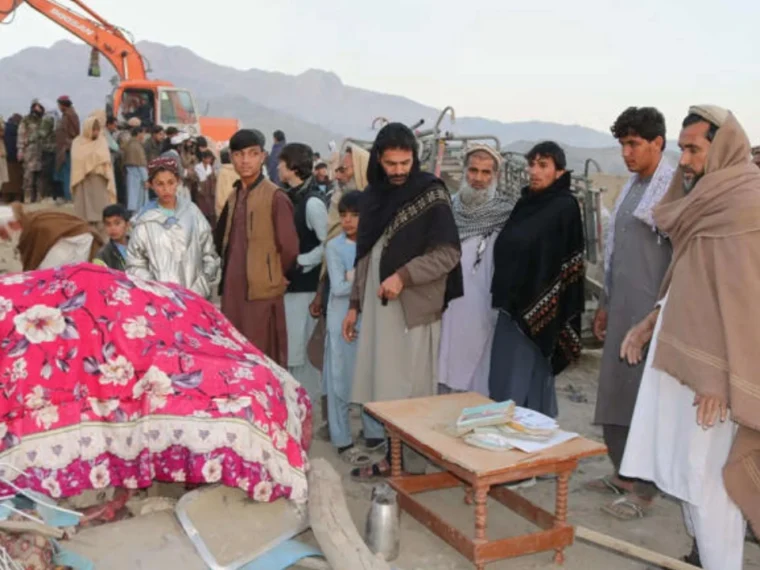
Villagers in affected areas were seen clearing rubble from damaged buildings and preparing funerals for the deceased. Local tribal elder Habib Ullah told media outlets that those killed were ordinary villagers and not affiliated with militant groups. “They lived simple village lives,” he said, disputing Pakistan’s claims.
Rising Violence and Blame Game
The strikes came just hours after a suicide bombing targeted a Pakistani security convoy in Bannu district, killing two soldiers, including a lieutenant colonel. Pakistan’s military vowed it would not “exercise any restraint” in responding to such attacks.
Militant violence has surged in Pakistan in recent years, with much of the blame placed on the TTP and outlawed Baloch separatist groups. Islamabad alleges that TTP fighters operate from Afghan territory—an accusation denied by both the group and Kabul’s Taliban authorities.
Last week, another suicide bombing in Bajaur district killed 11 soldiers and a child. Pakistani officials later claimed the attacker was an Afghan national. Tarar asserted that Islamabad possesses “conclusive evidence” linking recent attacks—including a suicide bombing at a Shiite mosque in Islamabad that killed 31 worshippers—to militants directed by Afghanistan-based handlers.
Diplomatic Fallout and Regional Tensions
In response to the airstrikes, Afghanistan’s Ministry of Foreign Affairs Afghanistan summoned Pakistan’s ambassador to Kabul and lodged a formal protest. The ministry warned that protecting Afghan territory is the Islamic Emirate’s responsibility and cautioned Pakistan about the consequences of further violations.
Pakistan has repeatedly urged Afghanistan’s Taliban rulers to prevent militant groups from using Afghan soil to launch attacks across the border. Islamabad has also called on the international community to pressure Kabul to uphold commitments made under the Doha agreement.
Security analyst Abdullah Khan noted that previous mediation efforts by Qatar, Turkey, and Saudi Arabia appear to have failed in easing tensions. He warned that the latest strikes could further destabilize an already fragile relationship between the two neighbors.
Although a Qatari-mediated ceasefire following deadly border clashes last October has largely held, attempts at formalizing a long-term agreement during talks in Istanbul in November yielded little progress. Relations between Islamabad and Kabul remain strained, with periodic flare-ups threatening broader regional stability.
As both sides exchange accusations, the situation along the Pakistan-Afghanistan border continues to remain volatile, raising fears of further escalation in the coming weeks.