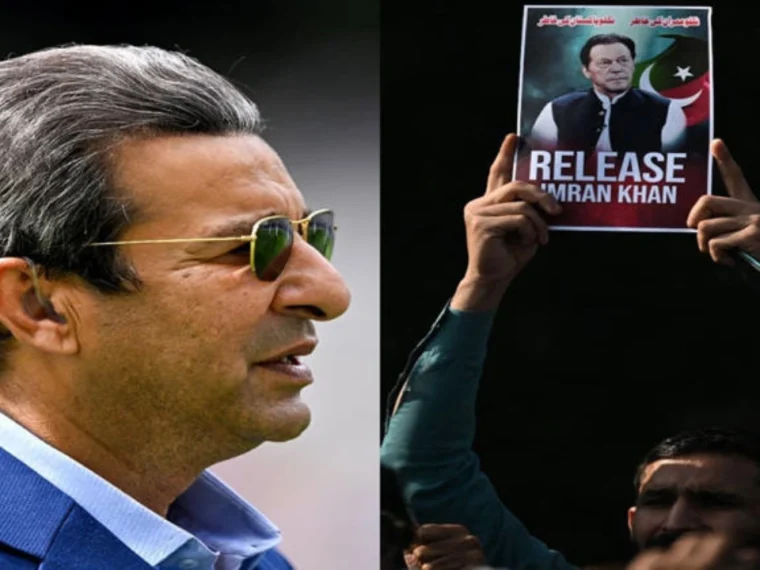
Former Pakistan cricket legends Wasim Akram and Waqar Younis have called on authorities to provide immediate and comprehensive medical care to former Pakistan Prime Minister Imran Khan following alarming reports about his deteriorating eyesight.
Akram expressed deep concern after reports suggested that Khan has lost a significant portion of vision in his right eye. In a message posted on social media platform X, Akram described the situation as “heartbreaking,” referring to Khan as “our skipper” and urging authorities to ensure he receives the best possible medical attention. He also wished Khan strength and a speedy recovery.
Akram, who played under Khan’s leadership during Pakistan’s historic 1992 World Cup victory, is among several prominent cricket figures voicing concern over the former premier’s health condition.
Echoing similar sentiments, Waqar Younis appealed for urgent treatment, urging authorities to set aside political differences. He described Khan as a national hero who brought immense pride to the country through his sporting achievements and stressed that he requires immediate medical intervention.
Khan, 73, has been in custody since August 2023 in connection with multiple legal cases. He and his party, Pakistan Tehreek-e-Insaf (PTI), maintain that the charges are politically motivated. However, recent developments have shifted focus to his health.
According to Pakistani media reports, the Supreme Court recently reviewed a medical assessment submitted after a visit to Khan at Adiala Jail in Rawalpindi. The report indicated that Khan currently retains only about 15% vision in his right eye and recommended urgent consultation with a specialist ophthalmologist.
The court reportedly directed the government to conduct a comprehensive medical evaluation, emphasizing that the health and well-being of a prisoner fall under the state’s responsibility. It also instructed authorities to allow Khan access to his personal doctors and facilitate communication with his sons, Qasim and Sulaiman.
Medical findings presented in court revealed that Khan had normal 6/6 vision in both eyes as recently as October 2025. However, he later complained of blurred and hazy vision that progressively worsened. An ophthalmologist at the Pakistan Institute of Medical Sciences (PIMS) reportedly diagnosed a blood clot that caused severe damage to his right eye. Despite treatment efforts, only partial vision has been restored.
Khan’s son, Kasim Khan, alleged on social media that his father’s health issues stem from prolonged solitary confinement and medical neglect during incarceration. He claimed that necessary blood tests and timely treatment were denied. Authorities, however, have rejected these allegations, asserting that Khan has received medical care in line with prison regulations.
Amid increasing political pressure, senior officials indicated that a comprehensive medical board comprising government and private doctors may soon be formed to evaluate Khan’s overall condition. Discussions are reportedly underway involving the federal government, PTI leadership, Khan’s family, and legal representatives to finalize the board’s composition and determine the location of treatment.
Sources suggest that Khan could be shifted from Adiala Jail to a hospital in Islamabad for specialized eye care. Facilities under consideration include Al-Shifa Trust Eye Hospital, PIMS, and the Federal Government Polyclinic Hospital. PTI leaders have specifically demanded treatment at Shifa International Hospital under the supervision of his personal physicians.
Meanwhile, opposition lawmakers staged a sit-in outside Parliament House, demanding transparency and immediate specialist treatment. Khan’s sister, Aleema Khan, confirmed that he was recently permitted a 20-minute phone conversation with his sons following court orders, describing him as emotionally uplifted after hearing their voices.
As legal proceedings continue, attention remains firmly fixed on Khan’s health, with growing calls from political leaders, supporters, and former teammates urging swift and adequate medical care.