White sugar vs jaggery: Sweeteners are an essential part of daily diets across the world, especially in Indian households where desserts, tea, and traditional foods often rely on them. Among the most debated options are white sugar and jaggery. While white sugar is widely consumed, jaggery is often marketed as a “healthier” natural alternative. But is jaggery truly better than white sugar? Let’s break down the facts, nutrition, and health impact to find out which sweetener actually deserves a place in your diet.
What Is White Sugar?
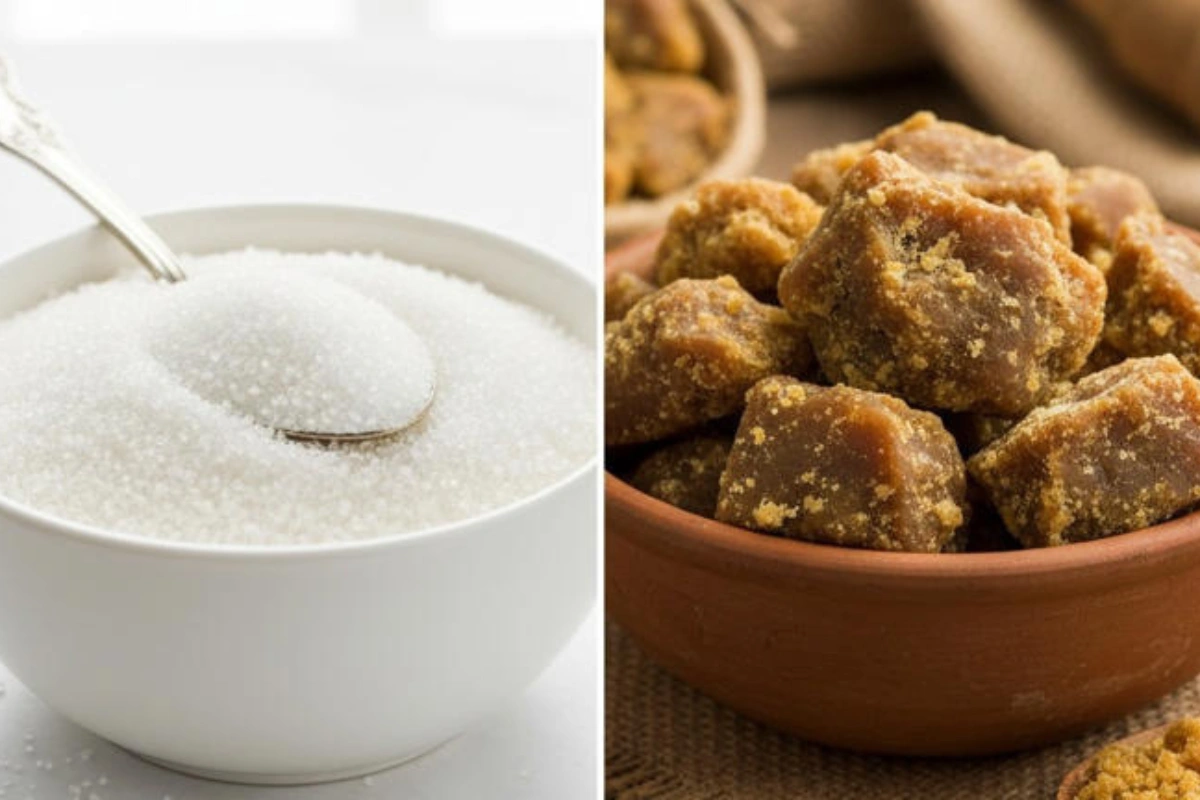
White sugar, also known as refined sugar or sucrose, is produced from sugarcane or sugar beet through extensive refining. During this process, molasses and other natural components are removed, leaving behind pure sucrose crystals.
Key characteristics of white sugar:
-
Highly refined and processed
-
Contains empty calories with no vitamins or minerals
-
Rapidly increases blood sugar levels
-
Easily absorbed by the body
Excessive consumption of white sugar has been linked to obesity, type 2 diabetes, heart disease, tooth decay, and inflammation.
What Is Jaggery?
Jaggery is a traditional unrefined sweetener made by boiling sugarcane juice or palm sap until it solidifies. Unlike white sugar, jaggery retains molasses, which gives it its brown color and nutrient content.
Key characteristics of jaggery:
-
Minimally processed
-
Contains trace minerals like iron, potassium, magnesium, and calcium
-
Rich in antioxidants
-
Commonly used in traditional Indian diets
Jaggery is often praised in Ayurveda for its warming properties and digestive benefits.
Nutritional Comparison
From a calorie standpoint, both white sugar and jaggery are quite similar. One teaspoon of either provides roughly the same number of calories. The key difference lies in nutrient density.
-
White sugar: Zero micronutrients, only calories
-
Jaggery: Small amounts of iron, zinc, potassium, and antioxidants
While jaggery is not a nutritional powerhouse, it does offer slightly more value than refined sugar.
Impact on Blood Sugar Levels
A common misconception is that jaggery is safe for diabetics. In reality, both white sugar and jaggery have a high glycemic index and can cause rapid spikes in blood glucose levels.
-
White sugar raises blood sugar quickly
-
Jaggery also raises blood sugar, though marginally slower
For people with diabetes or insulin resistance, moderation or alternatives like stevia or monk fruit are better choices.
Digestive and Detox Claims
Jaggery is often promoted as a digestive aid and natural detoxifier. Traditional wisdom suggests that consuming jaggery after meals can stimulate digestive enzymes and help cleanse the respiratory tract.
While these benefits are supported more by tradition than strong scientific evidence, jaggery’s mineral content and antioxidants may offer mild digestive support compared to white sugar.
Effect on Weight and Metabolism
Neither white sugar nor jaggery is ideal for weight loss. Both contribute empty or near-empty calories when consumed in excess.
-
White sugar promotes fat storage and cravings
-
Jaggery may reduce cravings slightly due to slower digestion
However, overconsumption of jaggery can still lead to weight gain.
Which One Is Actually Healthier?
When compared directly, jaggery is marginally healthier than white sugar due to its unrefined nature and trace nutrients. However, “healthier” does not mean “healthy.”
Choose jaggery if:
-
You want a minimally processed sweetener
-
You prefer traditional, natural foods
-
You consume sweets occasionally
Limit both if:
-
You are managing diabetes
-
You are trying to lose weight
-
You consume sweetened foods daily
The healthiest approach is to reduce overall sugar intake, regardless of the source.
Jaggery is a better alternative to white sugar, but it is not a free pass to overindulge. Both sweeteners impact blood sugar and calories similarly. True health benefits come from moderation, balanced nutrition, and awareness—not from simply switching sweeteners.
About the Author