
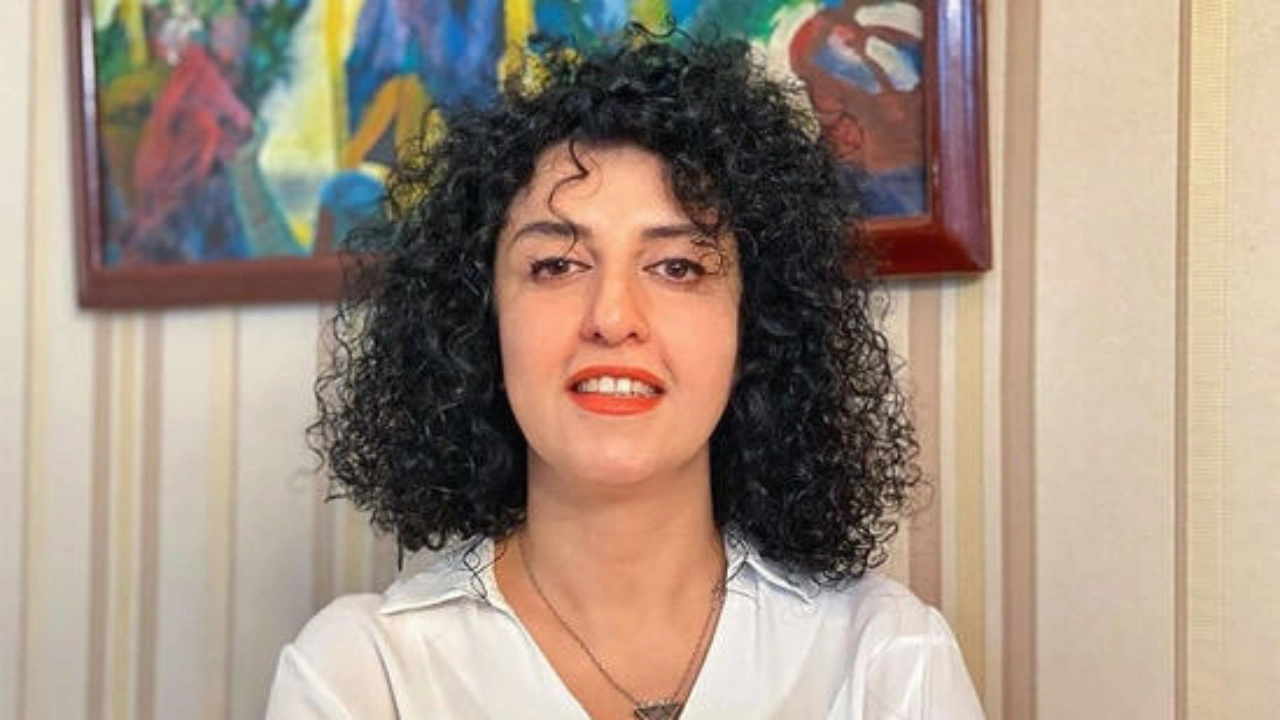
Narges Mohammadi
Iran has sentenced Nobel Peace Prize winner and prominent human rights activist Narges Mohammadi to a fresh prison term, intensifying international concern over Tehran’s treatment of dissidents and civil society voices. According to her lawyer, Mohammadi has been handed a six-year prison sentence on charges of “gathering and collusion to commit a crime,” along with additional penalties linked to alleged propaganda activities.
Her lawyer, Mostafa Nili, confirmed that the verdict was issued by an Iranian court on Sunday. In addition to the six-year sentence, Mohammadi has been sentenced to one and a half years in prison for propaganda-related offenses. The court also imposed a two-year travel ban, preventing her from leaving the country, and ordered two years of internal exile to the city of Khosf in Iran’s eastern South Khorasan province.
However, under Iranian law, multiple prison sentences are typically served concurrently, meaning Mohammadi would serve the longest sentence rather than consecutive terms. Her lawyer emphasized that the ruling is not final and can still be challenged in an appeals court.
Nili also expressed hope that Mohammadi’s ongoing health issues could lead to her temporary release on bail so she can receive appropriate medical care. Mohammadi has faced recurring health complications during her imprisonment, which rights groups say have been exacerbated by harsh detention conditions.
A decade marked by imprisonment and activism
Now 53 years old, Narges Mohammadi has spent much of the past decade behind bars, repeatedly targeted for her outspoken activism. She is widely known for her campaign against capital punishment in Iran, as well as her criticism of the country’s mandatory dress code for women and broader restrictions on civil liberties.
Her repeated arrests and trials have severely affected her personal life. Mohammadi has been separated from her twin children, who live in Paris, and has not seen them in person since 2015. Despite prolonged incarceration, she has continued to speak out through letters, messages, and legal appeals, becoming a powerful symbol of resistance for many Iranians.
Earlier this week, Mohammadi reportedly began a hunger strike while in detention. According to a statement released by her family’s foundation, the protest was intended to highlight her “unlawful detention” and the poor conditions under which she is being held. Hunger strikes have been a recurring form of protest among Iranian political prisoners seeking attention to their treatment.
Temporary release and Nobel recognition
In December 2024, Mohammadi was temporarily released for about three weeks on medical grounds. The release followed serious health concerns related to her recovery after the removal of a tumor and a bone graft procedure. Rights organizations had repeatedly warned that denying her adequate medical treatment could pose a serious risk to her life.
Despite her imprisonment, Mohammadi’s global recognition grew. In 2023, she was awarded the Nobel Peace Prize for her long-standing struggle against oppression in Iran, particularly her opposition to the death penalty and her advocacy for women’s rights. As she was incarcerated at the time, her children accepted the award on her behalf, a moment that drew widespread international attention and sympathy.
International criticism of Iran’s human rights record
Iran’s treatment of Mohammadi has once again put the spotlight on the country’s human rights record, especially its use of the death penalty. Organizations such as Amnesty International have consistently criticized Iran for its high number of executions, noting that the country carries out more executions annually than any nation except China, where official data is not publicly available.
Human rights groups and foreign governments are expected to closely monitor Mohammadi’s appeal process, with renewed calls for her immediate release and for broader reforms in Iran’s judicial and penal systems.
About the Author