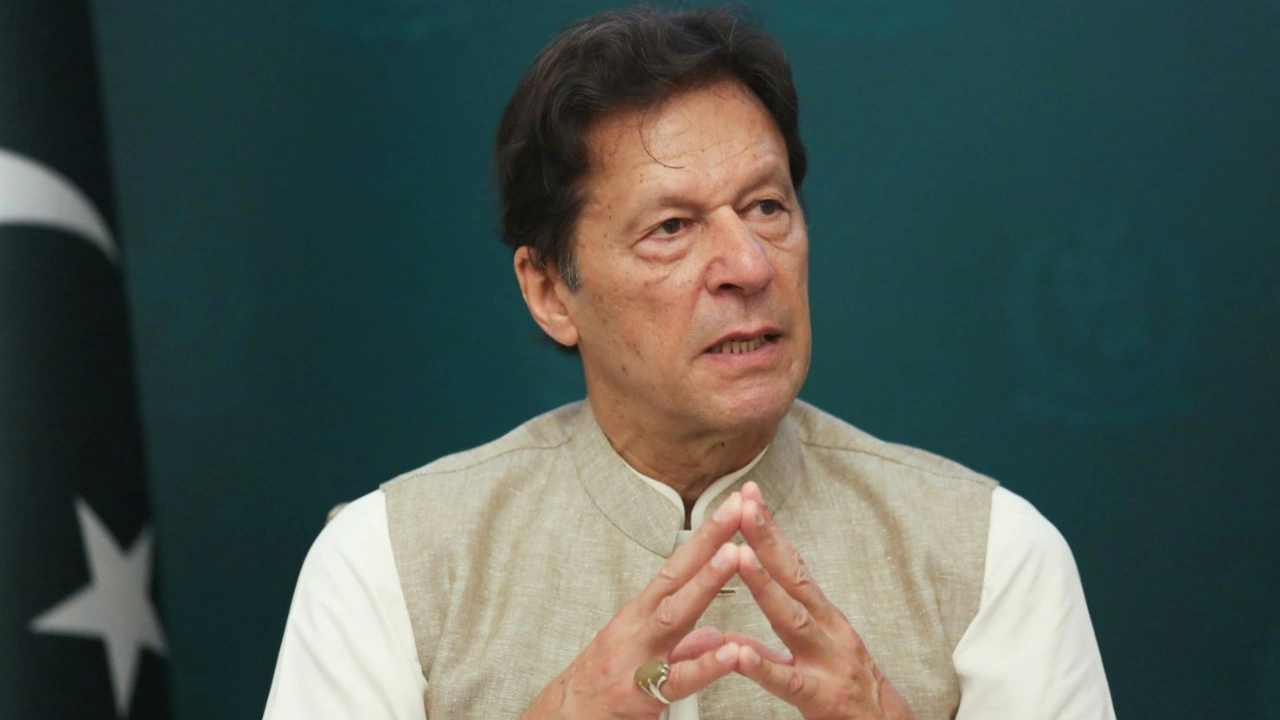
Imran Khan
Fresh controversy has emerged around former Pakistan Prime Minister Imran Khan after his sons accused the Pakistani government of preventing them from visiting their jailed father during what they describe as a serious health crisis. Suleman Khan and Kasim Khan, who live in London, claim that authorities have deliberately refused to grant them visas, raising questions about human rights and political transparency in the country.
Imran Khan, 73, has been in custody since August 2023. He is currently lodged in Adiala Jail in Rawalpindi after being convicted in one of several legal cases filed against him. His imprisonment has remained a major political flashpoint in Pakistan, with his supporters and party members consistently alleging unfair treatment and political targeting.
Sons Claim Visa Refusal Is Intentional
Kasim Khan took to social media platform X to share his concerns, stating that both he and his brother have been trying to travel to Pakistan to meet their father. He alleged that their visa applications have been deliberately blocked by the government.
“My brother and I are trying to visit Pakistan to see our father. He has spent more than 900 days in solitary confinement, his health is deteriorating, and he does not have access to independent medical care,” Kasim wrote.
He further accused authorities of engaging in what he described as collective punishment by preventing family members from meeting Khan. According to Kasim, denying a prisoner proper medical treatment and restricting family contact is both inhumane and a violation of basic human rights.
Concerns Over Imran Khan’s Health
The family has repeatedly raised alarm about Khan’s health condition, claiming that he has remained isolated for months and has limited access to his personal doctors. Reports circulated by Khan’s political party, Pakistan Tehreek-e-Insaf (PTI), suggest that he may be suffering from a serious eye condition that could lead to permanent vision loss if left untreated.
Kasim stated that credible medical information suggests his father has been diagnosed with Central Retinal Vein Occlusion (CRVO), a serious disorder that blocks blood flow in the retina and can cause irreversible damage without urgent treatment.
He also alleged that authorities have restricted Khan’s ability to consult trusted medical professionals and even blocked communication between him and his family members. Kasim urged global human rights organizations to intervene, claiming the situation reflects broader concerns about democracy and civil liberties in Pakistan.
Government Rejects Health Claims
Meanwhile, Pakistan’s Information Minister Attaullah Tarar has dismissed claims that Khan’s health is deteriorating. On January 29, Tarar stated that the former prime minister recently underwent a medical procedure related to an eye issue and is currently in stable condition.
Government officials have maintained that Khan is receiving proper care and that allegations regarding his treatment are politically motivated. However, PTI leaders continue to insist that the situation is serious and requires immediate independent medical evaluation.
PTI Raises Alarm Over Medical Emergency
PTI recently released a statement highlighting what it described as a grave medical emergency involving Imran Khan. The party claimed that medical experts who assessed Khan inside the jail confirmed the seriousness of his eye condition and warned that delayed treatment could cause permanent damage to his eyesight.
The party also criticized prison authorities and the government for allegedly delaying medical intervention and restricting external oversight. PTI supporters argue that Khan’s detention and treatment are part of a broader political crackdown on opposition voices in Pakistan.
Ongoing Political and Human Rights Debate
The situation surrounding Imran Khan’s imprisonment continues to fuel political tensions both domestically and internationally. While the government insists that legal processes are being followed, Khan’s family and supporters claim his detention reflects deeper democratic challenges within the country.
As concerns about his health grow and diplomatic attention increases, the issue is likely to remain a significant topic in Pakistan’s political and human rights discourse.
About the Author