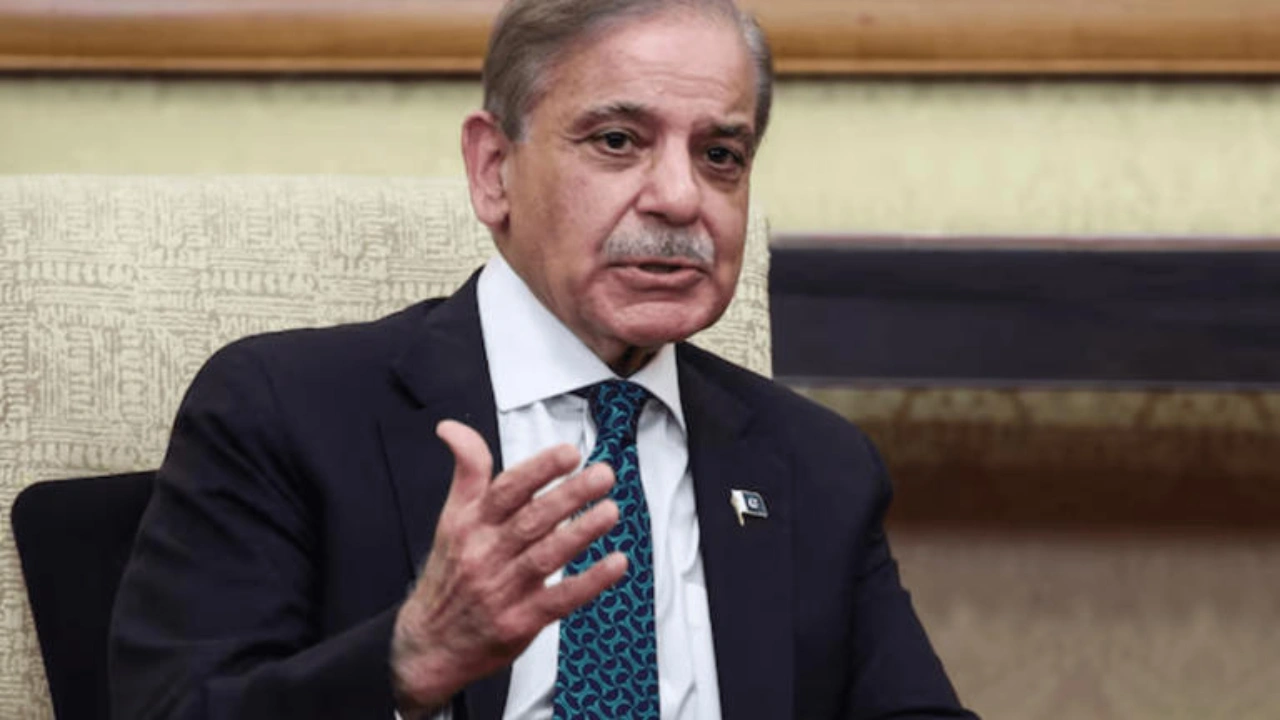
Pakistan Prime Minister Shehbaz Sharif has openly acknowledged the country’s severe financial crisis, saying Islamabad has been pushed into compromising its positions due to an acute shortage of funds. His candid remarks have drawn widespread attention, highlighting Pakistan’s continued dependence on foreign aid and loans to keep its economy afloat.
Speaking on Friday, Sharif expressed discomfort and embarrassment over repeatedly seeking financial assistance from other nations. He admitted that Pakistan’s leadership often finds itself unable to refuse conditions attached to external funding.
“We feel ashamed when Field Marshal Asim Munir and I travel around the world begging for money. Loans place a heavy burden on our self-respect. Our heads bow down in shame. We cannot say no to many things they ask us to do,” Sharif was quoted as saying by local broadcaster A1tv.
Pakistan’s economic vulnerability has been building for decades. Estimates suggest the country has received more than $200 billion in financial commitments since its creation in 1947. More recently, Pakistan secured over $4.5 billion in foreign assistance during the six-month period between July and December 2025, underlining its ongoing reliance on external inflows.
Countries Supporting Pakistan
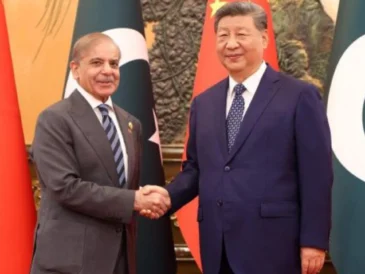
Sharif’s remarks come as Pakistan seeks continued support from the International Monetary Fund (IMF) and friendly nations to manage debt repayments and stabilise foreign exchange reserves. The prime minister acknowledged the role played by key allies, describing China as Pakistan’s “all-weather friend” and thanking Saudi Arabia, the United Arab Emirates (UAE), and Qatar for their consistent backing.
China has played a central role by rolling over billions of dollars in safe deposits, helping Pakistan meet its debt obligations. Around $4 billion in rollovers is projected for 2024–25. Additionally, the China-Pakistan Economic Corridor (CPEC) remains a cornerstone of bilateral cooperation, with over $60 billion invested in infrastructure and energy projects.
Saudi Arabia extended a $3 billion deposit to the State Bank of Pakistan in December 2024 and provided a deferred oil payment facility worth approximately $1.2 billion in 2025. Riyadh has also signaled interest in large-scale investments across mining, agriculture, and information technology sectors, with potential commitments ranging from $5 billion to $25 billion.
The UAE rolled over a $2 billion loan in early 2025 and announced plans to invest heavily in Pakistan’s energy, port operations, and wastewater treatment sectors. These investments could total $10–25 billion in the coming years.
Qatar, meanwhile, signed a protocol aimed at realizing $3 billion in investments, focusing on aviation, agriculture, and hospitality. Doha also remains a crucial energy partner, particularly as a supplier of liquefied natural gas (LNG).
Economy on the Brink
Sharif revealed that when his government assumed office, Pakistan’s economy was close to a technical default. He recalled his 2023 meeting with the IMF Managing Director in Paris, after which the global lender approved an economic programme that helped avert immediate collapse.
“When we came into power, the economic situation was extremely fragile, and the common man was facing immense hardship,” Sharif said, emphasizing that while stabilisation has begun, the challenges facing Pakistan remain far from over.