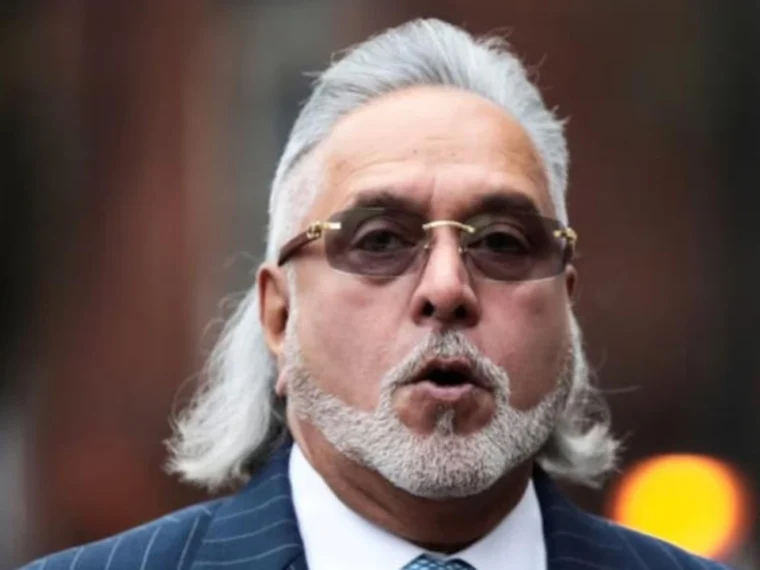
Fugitive businessman Vijay Mallya has informed the Bombay High Court that he cannot provide a clear timeline for returning to India, citing travel restrictions imposed by courts in the United Kingdom and the revocation of his passport.
The submission was made on Wednesday through his counsel, Amit Desai, before a division bench comprising Chief Justice Alok Aradhe and Justice Gautam Ankhad. The court had earlier directed Mallya to clarify whether he intended to return to India to face trial while simultaneously pursuing legal challenges against his designation as a fugitive economic offender and questioning the constitutional validity of the Fugitive Economic Offenders Act.
Mallya left India in March 2016 and is accused of defaulting on loans amounting to several thousand crores owed to Indian banks. In January 2019, a special court dealing with cases under the Prevention of Money Laundering Act declared him a Fugitive Economic Offender (FEO). The declaration paved the way for the attachment of his properties and strengthened extradition proceedings initiated against him.
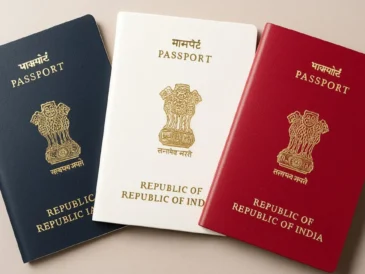
In the statement submitted to the High Court, Mallya said that pursuant to orders passed by courts in England, he is not permitted to leave or attempt to leave England and Wales. He also stated that he is barred from applying for or possessing any international travel document. As a result, he argued that he is unable to specify when he might be able to return to India.
The court was hearing Mallya’s petitions challenging both the order declaring him a fugitive economic offender and certain provisions of the FEO Act. Through his counsel, Mallya contended that his physical presence in India was not required for the High Court to examine the legal issues raised in his petitions.
However, the plea faced strong opposition from the Centre. Solicitor General Tushar Mehta, representing the Union government, argued that Mallya had approached the High Court under its extraordinary writ jurisdiction, which is discretionary and equitable in nature. He submitted that a litigant who does not comply with the law cannot seek relief from the court while remaining outside the jurisdiction of Indian authorities.
“It is a settled position in law that a person who is not complying with the law cannot claim the prerogative writ of this Court,” Mehta argued, emphasising that Mallya’s continued absence from India undermines his request for judicial relief.
The bench, after hearing preliminary submissions from both sides, directed the Centre to file a detailed reply to Mallya’s statement. The matter has been scheduled for further hearing next month.
Mallya’s case remains one of the most high-profile financial fraud matters in India. Over the years, Indian investigative agencies have pursued extradition efforts through UK courts, while also attaching and recovering assets linked to him under anti-money laundering laws. The ongoing proceedings before the Bombay High Court add another legal layer to the prolonged dispute over his status and potential return to face trial in India.