
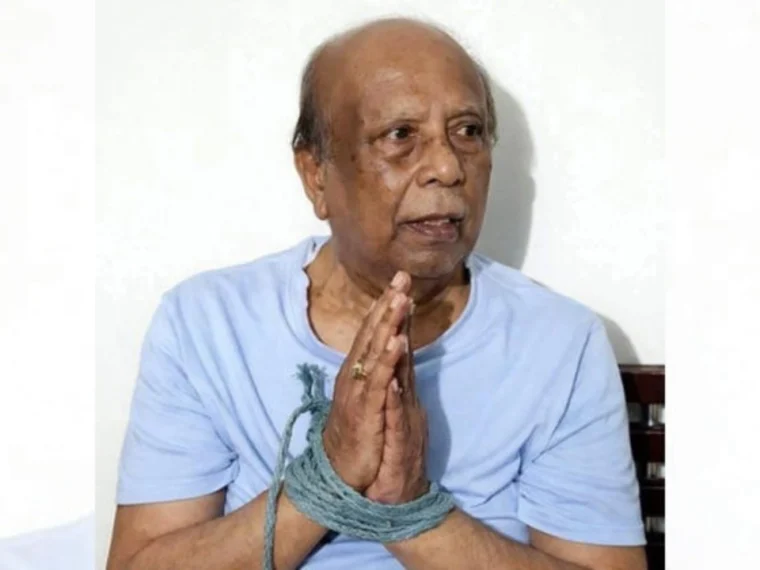
Ramesh Chandra Sen Death: Bangladesh’s prison system has once again come under scrutiny after the death of an elderly Hindu political leader while in judicial custody, reviving serious concerns over the treatment of detainees, particularly political figures and minorities.
Ramesh Chandra Sen, an 86-year-old veteran of the Awami League, passed away late Saturday night while incarcerated. A former minister, parliamentarian, academic, and long-time public servant, Sen had been in jail for nearly 18 months, during which his health reportedly deteriorated significantly. His death adds to a growing list of custodial fatalities that human rights organisations say reflect systemic neglect rather than isolated incidents.
Only weeks earlier, on January 11, former Awami League leader and noted Hindu artist Pralay Chaki also died while undergoing treatment under custody. Together, the two deaths have intensified debate around denial of medical care, prolonged detention, and repeated rejection of bail for elderly and ailing prisoners.
A SLOW AND EXPECTED LOSS
For Sen’s family, the tragedy was not unexpected. Relatives say the octogenarian repeatedly informed them about his declining strength and worsening medical condition. Despite multiple pleas for hospital treatment and bail on humanitarian grounds, their requests were consistently denied.
“He kept telling us he was getting weaker day by day,” a family member said. “He asked for medical help. He asked for bail. Nothing changed.”
Sen, once a respected face in public life, had spent decades shaping political and educational institutions in Bangladesh. His sudden fall from prominence to imprisonment shocked many of his supporters.
FROM PUBLIC SERVICE TO PROLONGED DETENTION
Approximately 18 months ago, Sen’s life took a dramatic turn. According to family accounts, he was allegedly assaulted and publicly humiliated by a mob before being taken into police custody. What followed, they claim, was a series of legal cases filed in succession, effectively ensuring his continued detention.
Despite the absence of any clear or conclusive charges, Sen was sent to jail, where he remained as his health steadily declined.
DETERIORATING HEALTH BEHIND BARS
Family members say Sen suffered from multiple age-related illnesses that required constant monitoring and specialized care. However, they allege that prison authorities provided only basic and inadequate treatment, insufficient for a man of his age and condition.
Repeated bail applications citing medical emergencies were rejected. According to the family, the refusal to release him on health grounds amounted to a denial of dignity and fundamental human rights.
“He was denied proper care. He was denied dignity. He was denied even basic human rights,” a relative said.
Late Saturday night, Sen died inside the prison. Officials later attributed his death to illness.
A PATTERN, NOT AN EXCEPTION
Human rights groups argue that such explanations have become disturbingly routine. According to rights organisations, at least 107 people died in custody across Bangladesh in 2025 alone, with a significant number reportedly linked to the Awami League.
In most cases, authorities cited heart attacks or sudden illness, explanations activists say are rarely subjected to independent investigation.
“Custodial deaths are reduced to paperwork instead of being treated as potential crimes,” a human rights activist noted.
LEGAL RESPONSIBILITY OF THE STATE
Bangladesh’s Constitution explicitly mandates the state to safeguard the life and dignity of every person in its custody. Articles 31 and 32 place full responsibility on authorities once an individual is detained.
“When the state takes away someone’s freedom, it also assumes responsibility for their survival,” a senior lawyer said. “Any death in custody demands clear answers.”
Yet, rights groups claim meaningful probes and accountability remain rare.
A BROADER POLITICAL CLIMATE
Sen’s death comes amid a tense political environment. Since the July movement, more than 200 senior Awami League leaders and office-bearers are reportedly behind bars.
Opposition leaders and rights defenders argue that custodial deaths must be viewed within this broader context of prolonged detentions and shrinking political space.
“This is not about one individual,” a rights advocate said. “It reflects a system where prisoners gradually fade away, unseen and unheard.”
For Sen’s family, however, the issue is deeply personal.
“He went to jail alive,” a relative said quietly. “He never came back.”