
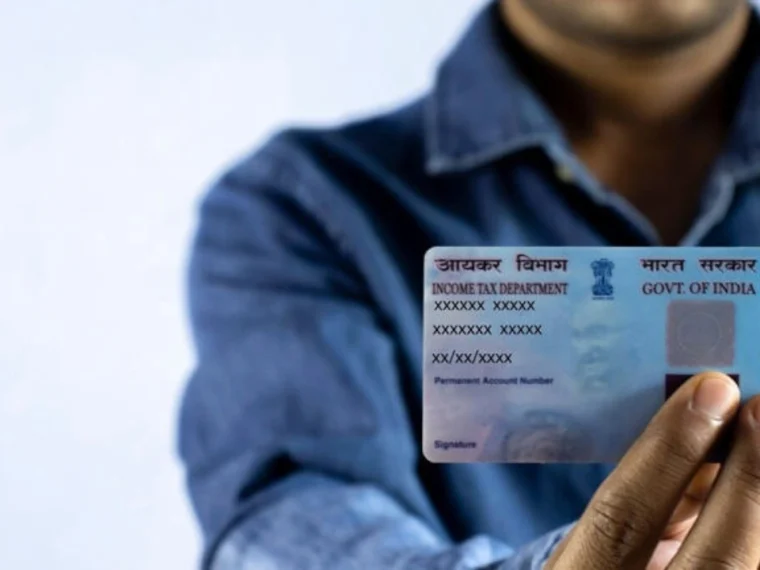
PAN property rule: Buying or selling a lower-value property could soon become less complicated. The Income Tax Department has proposed new draft rules that would remove the requirement to provide a Permanent Account Number (PAN) for property transactions valued below Rs 20 lakh. If the proposal is finalised, the revised rule will come into effect from April 1, 2026.
The move is being seen as an effort to simplify compliance for smaller property transactions while maintaining oversight for higher-value deals.
PAN Requirement Threshold May Double
Currently, quoting PAN is mandatory when purchasing or selling immovable property — including houses, flats, or plots — if the transaction value exceeds Rs 10 lakh. This rule has been in place to ensure transparency and allow tax authorities to track high-value transactions.
Under the proposed draft rules, this threshold would be increased to Rs 20 lakh. In practical terms, this means property deals valued below Rs 20 lakh would not require mandatory PAN disclosure. However, for transactions of Rs 20 lakh or more, PAN details would continue to be compulsory.
The draft also clarifies that certain arrangements will still fall under reporting rules if their value crosses the specified threshold. These include property transfers through gifts, settlements, or joint development agreements. If the value involved in such transactions is Rs 20 lakh or above, PAN reporting would remain mandatory.
Why Is the Government Proposing This Change?
Over the years, property prices have risen significantly across many parts of India. When the Rs 10 lakh threshold was set, it reflected the market conditions at that time. Today, even modest properties in semi-urban areas can easily exceed that value.
By raising the threshold to Rs 20 lakh, the government appears to be aligning the compliance rules with present-day market realities. Tax experts believe that the earlier limit had begun to cover transactions that were not necessarily “high value” in today’s context.
The revision could particularly benefit buyers in smaller towns and rural areas, where property values may still fall under Rs 20 lakh. It may also help families dealing with inherited properties or low-value plots by reducing paperwork and documentation requirements.
Impact on Small Buyers and Sellers
For many individuals, PAN documentation can add to procedural delays, especially when transactions involve elderly family members or those who may not regularly engage in financial documentation. Removing the requirement for smaller transactions could speed up property registrations and simplify the process.
However, in most major cities, property prices are already well above Rs 20 lakh. As a result, the rule change may not significantly impact urban real estate markets. Instead, its biggest effect could be felt in tier-2 and tier-3 cities, as well as rural areas.
PAN Still Mandatory for Higher-Value Transactions
It is important to note that the proposal does not eliminate PAN requirements entirely. Transactions worth Rs 20 lakh or more will continue to require PAN disclosure.
This ensures that tax authorities can still link property purchases with income records, helping monitor high-value real estate activity. PAN reporting plays a crucial role in preventing tax evasion, tracking undisclosed income, and maintaining transparency in the property sector.
The continued requirement for larger deals suggests that the government aims to strike a balance — easing compliance for smaller transactions while keeping strict monitoring for substantial investments.
What Happens Next?
Since these are draft rules, they are subject to review and final approval. If implemented, the revised threshold will apply from April 1, 2026.
For now, buyers and sellers should continue following existing rules requiring PAN for transactions above Rs 10 lakh until official confirmation is issued.
If the proposal is finalised, it could provide meaningful relief for smaller property transactions while maintaining robust oversight for high-value real estate deals.