Tensions between Pakistan and Afghanistan have escalated sharply after Islamabad launched a major retaliatory military campaign dubbed Operation Ghazab Lil Haq. Pakistani officials claim that at least 133 Taliban fighters have been killed so far, following alleged cross-border attacks on multiple Pakistani posts.
According to reports cited by Dawn, the operation began late Thursday night after what Pakistan described as “unprovoked firing” by the Afghan Taliban on several border areas in Khyber Pakhtunkhwa, including Chitral, Khyber, Mohmand, Kurram, and Bajaur.
What Is Operation Ghazab Lil Haq?
The operation, confirmed by Pakistan’s Defence Minister Khawaja Asif, involves coordinated airstrikes and ground offensives targeting Taliban installations across the border. The Arabic phrase “Ghazab Lil Haq” translates to “Righteous Fury,” underscoring Pakistan’s position that the action is retaliatory rather than aggressive.
Pakistan’s Information Minister Attaullah Tarar stated that more than 200 individuals have been injured since the beginning of the operation. He added that Afghan Taliban defence targets in Kabul, Paktia, and Kandahar were struck, with the possibility of additional casualties as the operation continues.
Military Targets and Damage Reported
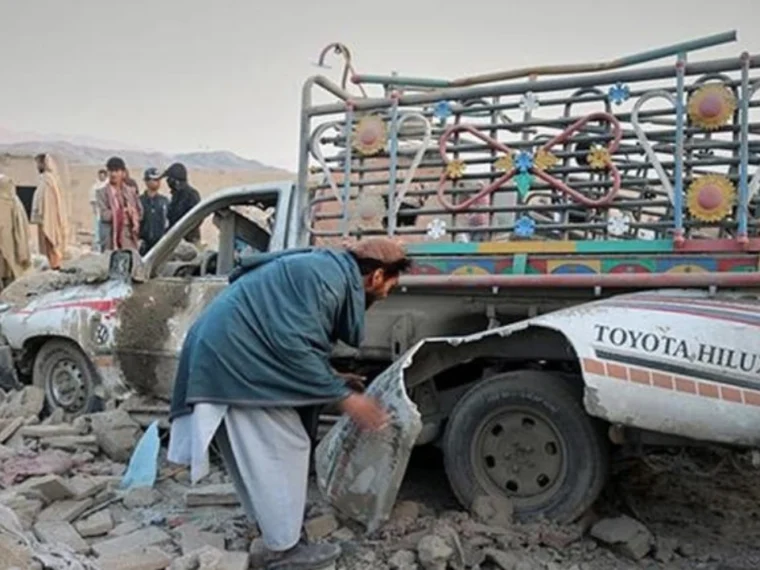
Pakistani authorities claim that significant Taliban infrastructure has been destroyed. According to official statements, the operation has so far resulted in the destruction of:
-
Two corps headquarters
-
Three brigade headquarters
-
Two ammunition depots
-
One logistics base
-
Three battalion headquarters
-
Two sector headquarters
-
More than 80 tanks, artillery guns, and armoured personnel vehicles
Pakistan’s state broadcaster PTV News reported that the Pakistan Air Force carried out strikes on key Taliban military installations in Kabul, Kandahar, and Paktia. Officials further stated that 27 Taliban posts were destroyed and nine others captured during the operation.
Pakistan’s Leadership Responds
In a statement released by the Prime Minister’s Office, Shehbaz Sharif reiterated that Pakistan would not compromise on its national security or territorial integrity.
“Our forces are fully capable of crushing any aggressive ambitions,” Sharif said, emphasizing that any act of aggression would be met with a “befitting reply.”
Similarly, President Asif Ali Zardari declared that Pakistan’s response was “comprehensive and decisive,” warning that those who mistake peace for weakness would face serious consequences.
Escalating Cross-Border Tensions
The latest clashes have further intensified the long-standing tensions along the disputed Durand Line, the border separating Pakistan and Afghanistan. The Afghan Taliban, represented by government spokesperson Zabihullah Mujahid, claimed that their actions were in response to earlier Pakistani airstrikes on Afghan territory.
Afghan officials alleged that up to 55 Pakistani soldiers were killed, two headquarters and 19 check posts were captured, and several soldiers taken prisoner. However, Pakistan has firmly rejected these claims. Information Minister Attaullah Tarar stated that two Pakistani soldiers were killed and three injured, dismissing Kabul’s figures as inaccurate.
A Widening Conflict?
The unfolding military confrontation marks one of the most serious escalations between the two neighbors in recent years. While both sides accuse each other of initiating aggression, the situation underscores the fragile security dynamics along the border.
As Operation Ghazab Lil Haq continues, regional observers are closely monitoring whether the conflict will de-escalate through diplomatic channels or evolve into a broader military standoff. For now, both nations appear firm in their positions, signaling a tense and uncertain period ahead in South Asian geopolitics.