
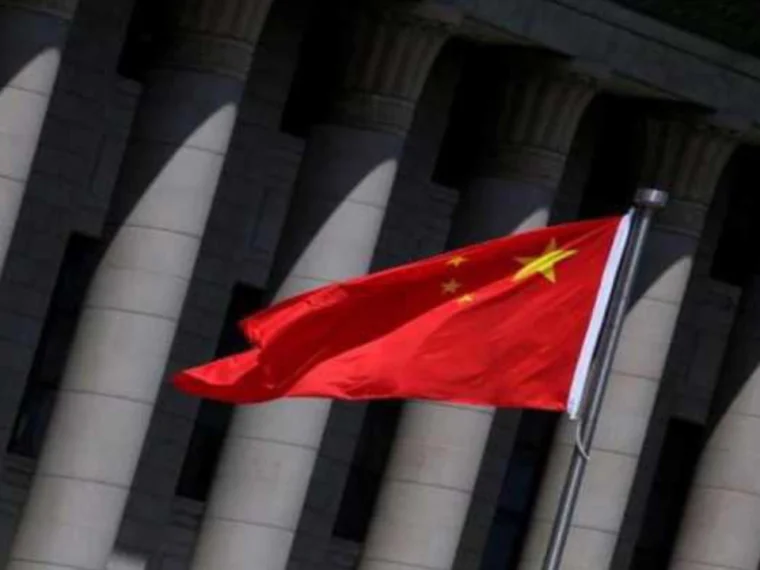
China’s economic slowdown is reshaping its global investment strategy, with India increasingly viewed as a potential destination for new capital flows. As growth pressures mount at home, several Chinese companies are exploring opportunities in the Indian market to sustain expansion and diversify revenue streams.
In recent quarters, China’s economy has shown visible signs of strain. Manufacturing activity has moderated, the property sector remains fragile, and export-oriented industries are grappling with tighter trade conditions in major Western markets. Slower global demand and geopolitical tensions have further complicated prospects for external trade, prompting companies to reconsider their overseas strategies.
Economic projections within China reflect this shift in outlook. Chinese economist Zhou Tianyong has suggested that growth could decline to around 2.5 percent in the coming years if structural reforms and productivity improvements fail to materialise. While Beijing continues to pursue policy measures aimed at stabilising consumption and investment, analysts note that domestic demand remains uneven and real estate stress continues to weigh on broader economic momentum.
Recent GDP estimates have also softened compared to earlier targets tied to income expansion goals. Quarterly growth toward the end of the previous year fell to multi-year lows, highlighting subdued household spending and cautious business investment. For many Chinese firms, maintaining growth above 4 percent under present global and domestic conditions appears increasingly challenging.
Against this backdrop, India has emerged as an attractive alternative. With one of the world’s fastest-growing large economies, India offers a sizeable consumer base, improving infrastructure, and policy-driven manufacturing incentives. Government programmes aimed at boosting local production, particularly in electronics, automobiles, and industrial equipment, have created opportunities for foreign firms seeking scale and market access.
Chinese companies operating in sectors such as consumer electronics, electric vehicles, renewable energy components, and industrial machinery are reportedly assessing entry or expansion strategies in India. The appeal lies not only in market size but also in India’s ambition to become a global manufacturing hub. Competitive labour costs, digital adoption, and supply-chain diversification efforts have further strengthened India’s positioning.
Policy discussions in New Delhi may influence the trajectory of this engagement. In 2020, India introduced stricter foreign investment rules requiring prior government approval for investments from countries sharing a land border with India. The move was widely seen as targeting Chinese inflows following heightened geopolitical tensions. However, officials are now reviewing these regulations and exploring whether smaller investments could be allowed under an automatic approval route within defined limits.
Industry associations have also proposed calibrated collaboration models. Some domestic electronics manufacturers have suggested joint ventures with Chinese firms, advocating equity caps to ensure Indian majority ownership while gaining access to advanced technology, capital, and established global supply networks. Such arrangements could balance strategic concerns with economic opportunity.
For China, diversifying outward investment into India could help offset weakening returns at home and limited access in certain developed markets. For India, selective Chinese investment may accelerate technology transfer, strengthen supply chains, and support export competitiveness, provided adequate safeguards remain in place.
Ultimately, the scale and direction of future Chinese investment into India will depend on regulatory clarity, geopolitical stability, and mutual economic interests. As China navigates slower growth and India advances its manufacturing ambitions, the evolving investment dynamic between the two Asian giants will remain closely watched by global markets.