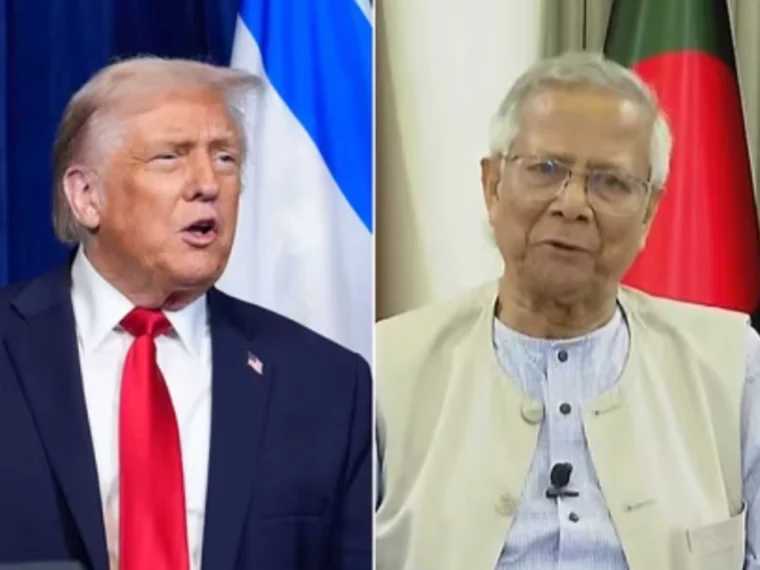
The United States and Bangladesh have concluded a new Agreement on Reciprocal Trade aimed at strengthening bilateral economic ties, expanding market access, and significantly reducing tariffs on key goods. Under the agreement, the US will lower reciprocal tariffs on Bangladeshi imports to 19 per cent, while granting zero-duty access to select textile and apparel products manufactured in Bangladesh.
The deal marks a major shift in trade relations between the two countries and is expected to have a substantial impact on Bangladesh’s export-driven economy, particularly its globally competitive garments sector.
According to a statement issued by the White House, Bangladesh has agreed to open its domestic market to a broad range of US industrial and agricultural products. These include chemicals, medical devices, machinery, motor vehicle parts, dairy products, poultry, fruits, and tree nuts. The agreement also includes commitments by Bangladesh to procure cars, motorcycles, and aircraft from US manufacturers.
In return, textile and apparel products produced in Bangladesh will receive zero reciprocal tariffs in the US market, a move widely seen as a boost for one of the country’s most important industries. The garment sector accounts for a major share of Bangladesh’s exports and employs millions of workers.
The White House confirmed that the US would reduce the reciprocal tariff rate, initially outlined in Executive Order 14257 issued on April 2, 2025, to 19 per cent for originating goods from Bangladesh. In addition, certain products listed under Annex III of Executive Order 14346, issued on September 5, 2025, will qualify for a zero per cent reciprocal tariff rate.
Bangladesh’s interim government welcomed the agreement, calling it a step forward in restoring trade competitiveness. Muhammad Yunus, Chief Adviser to the interim administration, said the US had committed to establishing a mechanism that would allow select Bangladeshi textile and apparel products—particularly those manufactured using US-produced cotton and man-made fibres—to enter the American market at zero duty.
Trade officials from both sides also highlighted the scale of commercial commitments tied to the agreement. Bangladesh is expected to purchase approximately $3.5 billion worth of US agricultural products, including wheat, soybeans, cotton, and corn. Additionally, the country plans to import US energy products worth an estimated $15 billion over the next 15 years.
One of the most significant elements of the deal is Bangladesh’s decision to procure aircraft from US aerospace major Boeing. Dhaka recently agreed to purchase 25 aircraft, a deal estimated to be worth between Tk 30,000 crore and Tk 35,000 crore, or roughly $2.46 to $2.87 billion. The aircraft purchase is viewed as part of a broader effort to rebalance trade flows and ease tariff pressures from Washington.
Lutfey Siddiqi, Special Envoy on International Affairs to Bangladesh’s Chief Adviser, praised the outcome of the negotiations, noting that tariffs had been reduced from an earlier proposed level of 37 per cent to 19 per cent.
“What started as 37 per cent is now down to 19 per cent, with additional benefits for selected items,” Siddiqi said, crediting months of negotiations and coordination across multiple time zones.
The agreement also places Bangladesh on a similar footing with other regional economies negotiating reciprocal trade arrangements with the US. India is currently in talks to reduce tariffs on its exports from 25 per cent to 18 per cent, while Pakistan’s reciprocal tariff rate stands at 19 per cent.
Trade analysts say the US–Bangladesh agreement reflects Washington’s broader strategy of linking tariff relief with increased market access, large-scale purchases, and supply-chain alignment. For Bangladesh, the deal offers relief for its textile exporters at a time of global economic uncertainty, while also increasing competition in domestic agricultural and industrial markets.
If implemented effectively, the agreement could reshape bilateral trade flows and reinforce Bangladesh’s position as a key manufacturing partner for the United States.