
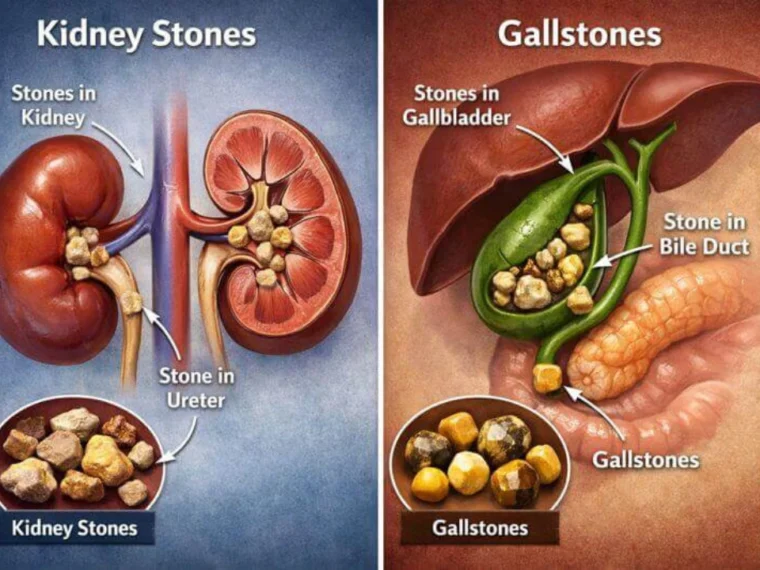
Kidney vs Gallbladder: Kidney stones and gallbladder stones are two common yet painful health conditions that many people confuse due to similar symptoms. While both involve the formation of hard deposits in the body, they affect different organs and produce distinct warning signs. Understanding the early symptoms can help you seek medical attention before the condition becomes severe.
Kidney stones form in the kidneys due to a buildup of minerals and salts, while gallbladder stones (also called gallstones) develop in the gallbladder when bile hardens. Let’s look at the five very early symptoms that can help you differentiate between the two.
1. Location of Pain
One of the earliest signs is the location of discomfort.
-
Kidney stones typically cause pain in the lower back, side (flank), or below the ribs. The pain may radiate toward the lower abdomen and groin.
-
Gallbladder stones usually cause pain in the upper right abdomen. This pain may spread to the right shoulder or upper back.
If the pain shifts from the back toward the groin, it is more likely related to kidney stones. Pain concentrated in the upper right abdomen after meals may indicate gallbladder stones.
2. Nature and Intensity of Pain
The type of pain also differs.
-
Kidney stone pain is often sharp, severe, and comes in waves. It may suddenly intensify and then subside.
-
Gallbladder stone pain tends to be steady and can last from 30 minutes to several hours, especially after eating fatty foods.
Kidney stone pain is commonly described as one of the most intense pains a person can experience, while gallbladder pain often feels like pressure or a tight grip in the upper abdomen.
3. Urinary Changes vs Digestive Issues
Early symptoms also involve different body systems.
-
Kidney stones may cause burning during urination, frequent urge to urinate, cloudy urine, or even blood in urine.
-
Gallbladder stones may trigger nausea, vomiting, bloating, and indigestion, particularly after heavy or oily meals.
If you notice urinary discomfort, kidney stones are more likely. If symptoms are related to digestion, gallbladder stones may be the cause.
4. Nausea and Vomiting
Both conditions can cause nausea, but the triggers differ.
-
With kidney stones, nausea usually occurs due to intense pain.
-
With gallbladder stones, nausea often follows meals, especially fatty or spicy food.
Pay attention to the timing of nausea — whether it’s linked to pain waves or food consumption.
5. Fever and Infection Warning
In advanced cases, both conditions can cause infection.
-
Kidney stones may lead to fever and chills if they block urine flow and cause infection.
-
Gallbladder stones can result in fever if the gallbladder becomes inflamed (a condition known as cholecystitis).
Fever along with severe pain is a medical emergency and requires immediate attention.
Key Differences at a Glance
| Symptom | Kidney Stones | Gallbladder Stones |
|---|---|---|
| Pain Location | Lower back, side, groin | Upper right abdomen |
| Trigger | Movement of stone | Fatty meals |
| Urinary Symptoms | Common | Rare |
| Digestive Issues | Rare | Common |
| Pain Pattern | Sharp, wave-like | Steady, lasting |
When to See a Doctor
Seek immediate medical care if you experience:
-
Severe or unbearable pain
-
Blood in urine
-
Persistent vomiting
-
High fever with chills
-
Yellowing of skin (possible gallbladder complication)
Early diagnosis through ultrasound, CT scan, or urine tests can prevent complications such as infection or organ damage.
Kidney and gallbladder stones may seem similar at first, but their early symptoms are quite different if you pay close attention. Pain location, nature of discomfort, urinary changes, and digestive triggers are key indicators. Recognizing these five very early symptoms can help you act quickly and avoid serious health risks.
If you notice persistent pain or unusual symptoms, consult a healthcare professional immediately. Early treatment can make a significant difference in recovery and overall well-being.