Republic Day
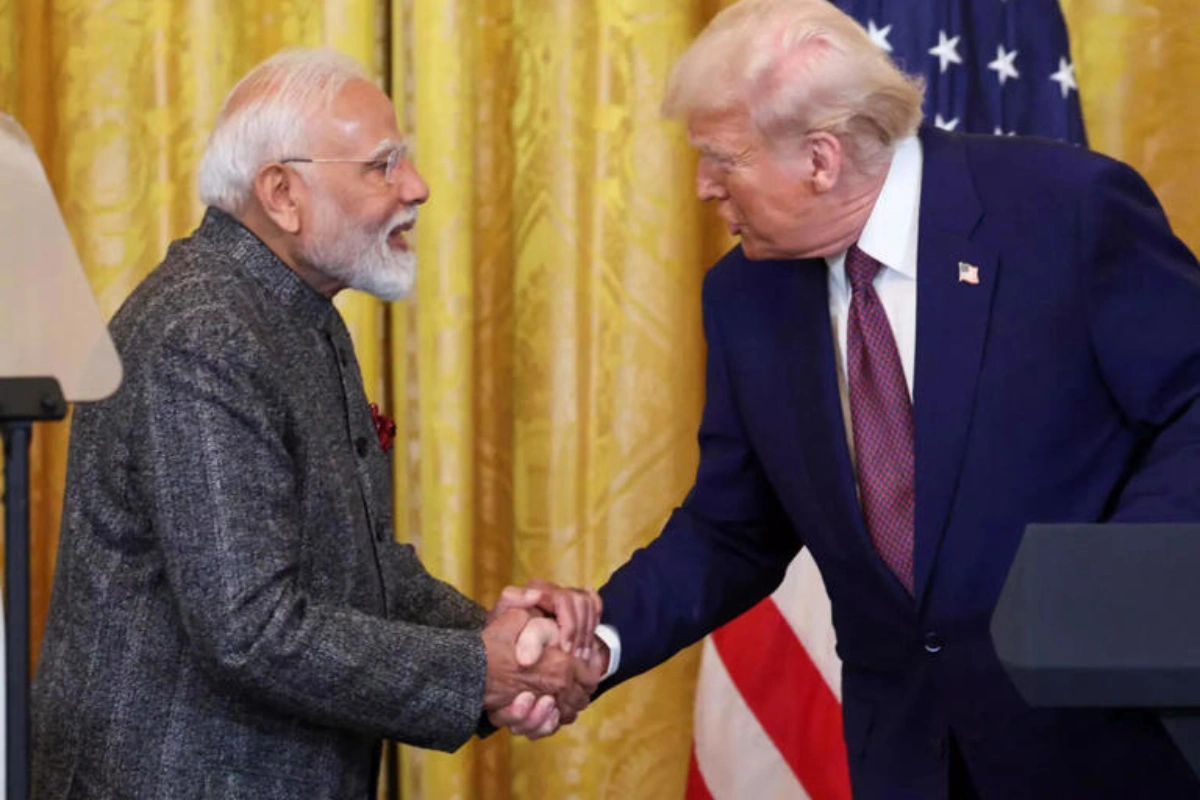
The United States on Monday extended warm greetings to India on the occasion of its 77th Republic Day, with President Donald Trump highlighting the shared democratic values between the two nations. Calling India and the US the world’s largest and oldest democracies, Trump underlined the historical bond between the two countries, even as bilateral relations continue to face challenges over trade, tariffs, and policy differences.
In a message released through the US Embassy in New Delhi, President Trump congratulated the people of India and its government, acknowledging the constitutional foundations that define the Indian Republic. He said the enduring relationship between the two nations is rooted in democratic ideals, institutional strength, and people-to-people ties that have evolved over decades.
“On behalf of the American people, I extend my sincere wishes to India as it celebrates its 77th Republic Day,” Trump said. “The United States and India share a unique and historic bond as the world’s oldest and largest democracies.”
Top US Leaders Emphasise Strategic Cooperation
US Secretary of State Marco Rubio also conveyed Republic Day wishes, drawing attention to the expanding scope of cooperation between Washington and New Delhi. He noted that despite ongoing policy differences, the relationship continues to deliver tangible outcomes across multiple strategic sectors.
Rubio highlighted collaboration in defence, clean energy, critical minerals, and emerging technologies, calling the partnership essential for regional stability. He also pointed to the growing importance of the Quad alliance, which brings together the US, India, Japan, and Australia to promote a free and open Indo-Pacific.
“Our engagement with India is multi-layered and forward-looking,” Rubio said, adding that the US remains committed to working with India to advance shared regional and global objectives in the coming year.
US Ambassador Attends Republic Day Parade
US Ambassador to India Sergio Gor attended the Republic Day celebrations at Kartavya Path, marking his first experience of the iconic parade. Describing the event as a tribute to India’s constitutional values and democratic spirit, Gor said the ceremony reflected the country’s institutional resilience and national pride.
He also drew attention to the participation of US-manufactured defence platforms in the ceremonial flypast, calling it a visible sign of the growing defence partnership between the two countries.
“Seeing US-made aircraft flying in Indian skies is a powerful reminder of the strategic trust between our nations,” Gor said.
Among the aircraft showcased during the parade were C-130J Super Hercules transport planes and Apache attack helicopters, both of which are part of India’s military inventory acquired through defence cooperation with the United States.
Trade and Tariff Disputes Cloud Bilateral Ties
Despite the positive messaging around democratic values and security cooperation, India-US relations have been under strain over economic and policy matters. The Trump administration’s decision to impose steep tariffs on Indian exports, including a 50 percent duty on certain goods, has impacted bilateral trade sentiment.
A significant point of contention has been a 25 percent tariff linked to India’s purchase of Russian oil, which Washington views as conflicting with its broader geopolitical stance. These measures have led to prolonged negotiations between the two sides, aimed at finalising a long-pending bilateral trade agreement.
However, talks have stalled primarily due to US demands for greater access to India’s agriculture and dairy sectors, an area New Delhi considers politically and economically sensitive.
Other Diplomatic Friction Points
Beyond trade, relations have also witnessed friction over political and diplomatic statements. Trump’s earlier claim of playing a role in ending the India-Pakistan conflict in May last year drew sharp reactions in India, which maintains that bilateral issues with Pakistan are strictly internal and not subject to third-party mediation.
Additionally, Washington’s revised immigration policies have raised concerns among Indian professionals and students, adding another layer of complexity to the relationship.
Balancing Differences With Strategic Alignment
Despite these challenges, analysts note that India and the US continue to engage pragmatically, recognising each other as key strategic partners in an increasingly uncertain global environment. Defence cooperation, technology sharing, and Indo-Pacific security remain strong pillars of the relationship.
Trump’s Republic Day message, observers say, reflects an effort to reinforce long-term democratic alignment, even as both nations navigate short-term disagreements.
About the Author