Chabahar Port
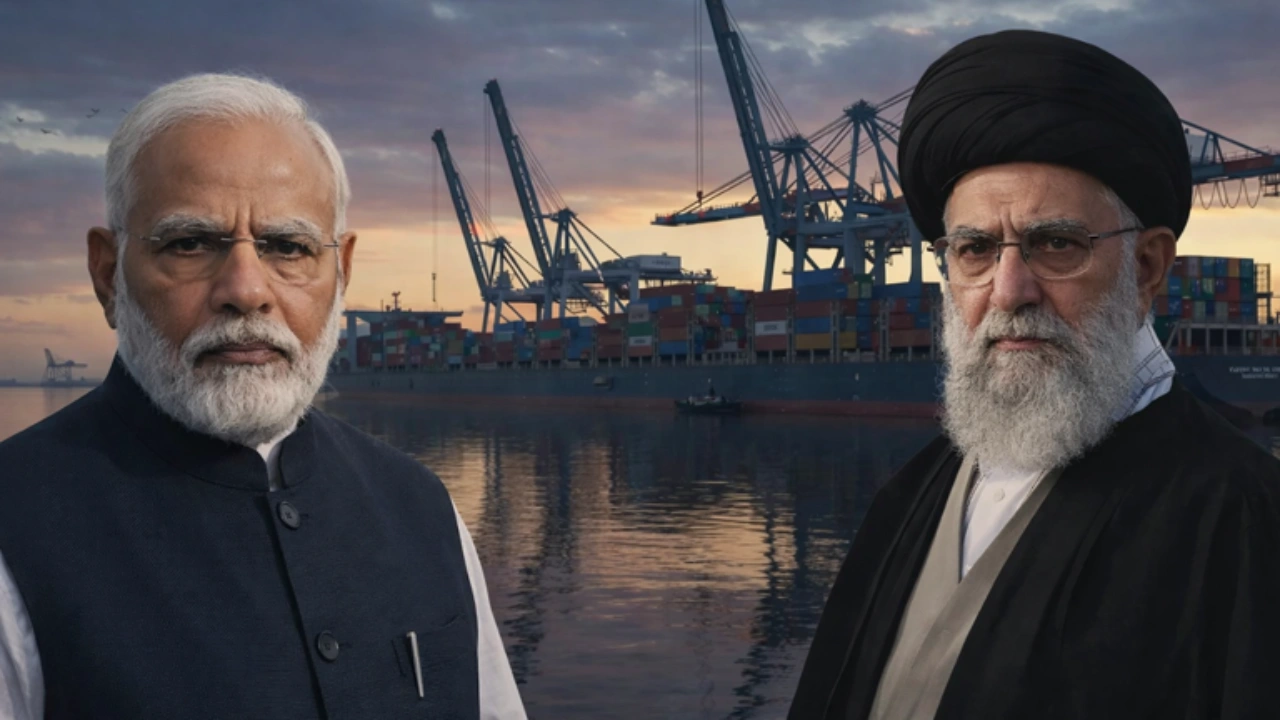
Iran has indicated that it remains open to working with India on the strategically important Chabahar port project even after New Delhi sharply reduced its financial commitment in the Union Budget for 2026–27. The development has sparked fresh debate over the future of the India-backed connectivity initiative, which has long been viewed as a gateway to Afghanistan and Central Asia.
Speaking at a media briefing at the Iranian Embassy in New Delhi ahead of the 47th anniversary of the Iranian Revolution, Iran’s Ambassador to India, Mohammad Fathali, underlined the continued relevance of the port and its geographic significance. He stressed that Iran values its partnership with India and believes cooperation on Chabahar should be expanded rather than scaled back.
In the previous financial year, 2024–25, India had allocated ₹400 crore to the Ministry of External Affairs for the Chabahar port project, and the funds were transferred to Iran. However, the latest Union Budget made no provision for the project, effectively bringing India’s direct budgetary support to zero. New Delhi has not yet issued an official statement clarifying its long-term plans for the port.
“Chabahar is a vital port and can play an important role in providing access to Afghanistan and Central Asia,” Ambassador Fathali said. “We have good relations with India, and we believe these relations should be strengthened on this issue.”
He also noted that Iran has not received any formal communication from the Indian government regarding the decision to skip the allocation this year. “Up to now, we have no comment from the Indian side,” he added.
Highlighting the port’s strategic location on the Gulf of Oman, Fathali emphasized that geography itself makes Chabahar indispensable. “The location of Chabahar will not change. Some countries rely on this geography to reach Central Asia and Afghanistan,” he said, expressing confidence that India would eventually find a way to manage the situation and continue its involvement.
India skips allocation in Budget 2026–27
India’s decision to omit funding for the Chabahar port in the 2026–27 budget marks a significant shift from earlier years. Until now, New Delhi had consistently earmarked around ₹100 crore annually for the project, reflecting its strategic importance in regional connectivity and trade.
The move comes against the backdrop of renewed US sanctions on Iran. In September last year, the United States announced tighter economic restrictions on Tehran, though it granted India a six-month waiver for its involvement in the Chabahar port. That exemption is due to expire on April 26, adding uncertainty to India’s future role.
According to officials familiar with the matter, India is in the process of transferring approximately USD 120 million—the amount it had previously committed to the project—to limit its direct exposure. They said the government is also examining the option of setting up a new entity to carry the project forward. Such a structure would allow India to continue supporting the port’s development without the Indian government being directly involved, PTI reported.
Strategic stakes remain high
Chabahar has long been seen as a strategic counterbalance to China’s Gwadar port in Pakistan and a crucial link in India’s plans to access landlocked Afghanistan and Central Asia without transiting through Pakistan. Any prolonged uncertainty over funding or management could affect regional trade ambitions and India’s broader geopolitical interests.
For now, Iran’s message is clear: the door remains open. While India reassesses its approach amid sanctions and diplomatic pressures, Tehran continues to signal that Chabahar’s importance endures—and that cooperation with India is still welcome.
About the Author