Solar
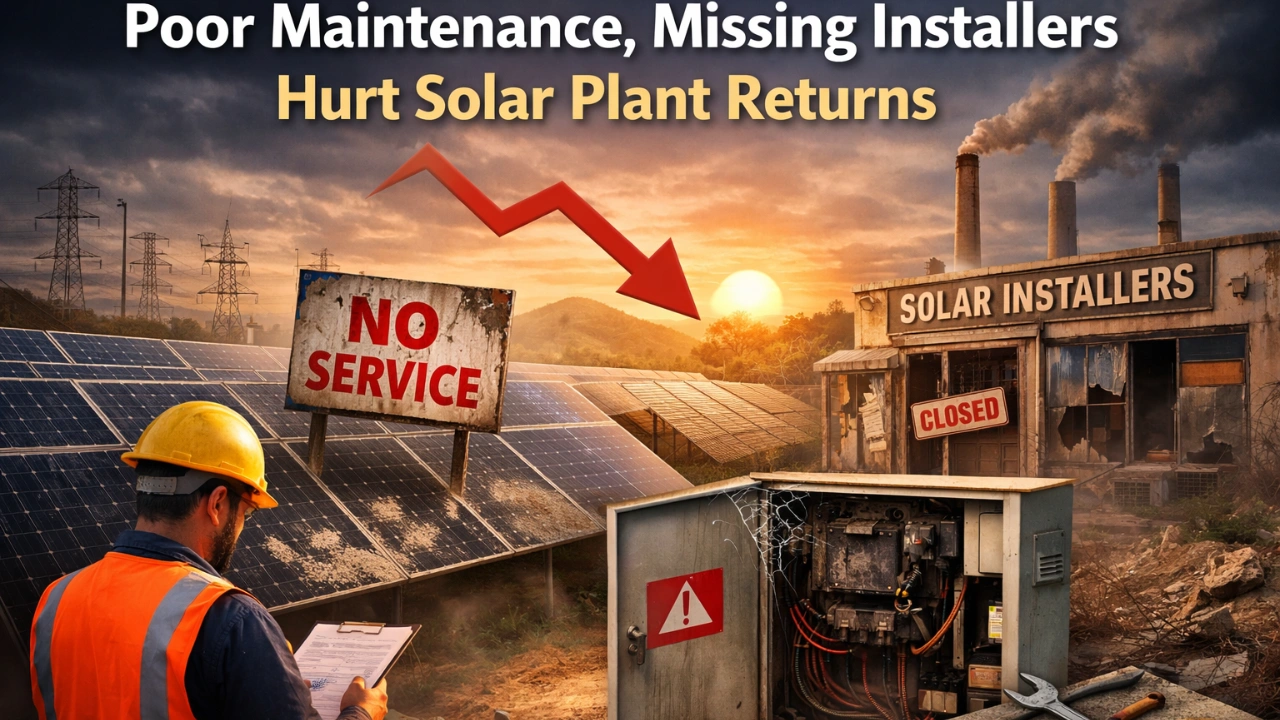
India’s rapid push toward renewable energy has led to an unprecedented expansion of solar power capacity across the country. Rooftop systems, commercial installations and utility-scale solar plants are being commissioned at a fast pace. However, behind this growth story, a growing number of solar power plant owners are quietly grappling with serious operational and financial challenges. Industry experts warn that poor operation and maintenance (O&M) practices and the disappearance of installers after commissioning are causing heavy generation losses and shrinking returns on investment (ROI).
Solar power plants are often marketed as “install and forget” assets, but professionals in the sector say this perception is misleading. While solar systems require less maintenance than conventional power plants, they are not maintenance-free. In fact, inadequate servicing and monitoring can reduce annual power generation by 15 to 25 percent, directly impacting revenue and long-term project viability.
How poor maintenance hurts generation
Solar modules are designed to last decades, but they operate in harsh outdoor conditions. Dust accumulation, air pollution, extreme temperatures, humidity and electrical stress continuously affect system performance. Without scheduled cleaning, inspection and preventive maintenance, efficiency gradually declines.
Experts point out that common problems such as dirty panels, inverter tripping, loose connectors, faulty earthing and unnoticed string failures often remain undetected for long periods when professional O&M is absent. Even a few days of inverter downtime or sustained panel soiling can lead to measurable losses, particularly for commercial and industrial consumers who rely on solar power to offset high grid tariffs.
In many cases, plant owners only realise something is wrong when electricity bills rise again or when annual generation reports fall far short of projections. By then, the losses have already accumulated.
Installers disappearing after handover
An even bigger concern emerging across the sector is the growing number of EPC (engineering, procurement and construction) companies that vanish soon after project commissioning. Several solar plant owners report that once installation is completed and final payments are received, the installer becomes unreachable or shuts operations entirely.
This leaves owners without technical support, spare parts access or help with warranty claims. As a result, monitoring systems stop working, minor faults escalate into major breakdowns, and plant downtime increases sharply. Owners are then forced to hire third-party service providers at high costs, often without access to original design details or manufacturer coordination.
Within the industry, such abandoned projects are commonly referred to as “orphaned solar plants.” These systems typically operate far below their designed capacity, turning what was supposed to be a stable long-term investment into a recurring financial drain.
Why choosing the right installer matters
Industry veterans stress that selecting a reputable, financially stable and experienced installer is critical for safeguarding a solar investment over its entire 25-year lifespan. While low-cost EPC players may offer attractive upfront pricing, many lack long-term commitment, technical depth or service infrastructure.
When such companies exit the market, plant owners pay the price through extended payback periods, recurring faults and ongoing generation losses. In contrast, a credible installer focuses not just on commissioning, but on system design quality, component selection and lifecycle support.
A reliable installer typically ensures proper inverter sizing, quality cabling, robust earthing, adherence to safety standards and long-term service capability. They also help manage warranties and maintain relationships with equipment manufacturers, which becomes crucial when components fail years after installation.
As one renewable energy consultant put it, “Solar is a 25-year asset. If the installer disappears in two years, the customer bears the consequences for the next 23. Paying slightly more upfront for a dependable partner often saves many times that amount over the plant’s life.”
Installation quality and maintenance go hand in hand
Experts also emphasise that no amount of maintenance can fully compensate for a poorly designed or badly installed system. Incorrect inverter selection, substandard wiring and weak earthing practices create chronic performance issues that persist throughout the plant’s life.
“Maintenance can optimise performance, but it cannot fix fundamental design flaws,” said a senior solar consultant. “That’s why choosing the right EPC partner from day one is just as important as signing a good O&M contract.”
Financial impact highlighted by industry players
Speaking on the issue, a representative of Jetsor Power Systems Pvt Ltd, a company engaged in solar plant operation and maintenance, underlined the financial consequences of neglect.
“When professional maintenance is missing, solar plants suffer continuous generation loss, frequent inverter failures and faster degradation of critical components. These losses are not always visible immediately, but over time they translate into lakhs or even crores of rupees in lost revenue. Proper installation by a reliable partner and consistent O&M are essential to protect the investment,” the representative said.
Rising demand for professional O&M services
As India’s installed solar base continues to age, the demand for structured, professional O&M services is rising steadily. Plant owners are increasingly looking for long-term service partners who can provide regular inspections, real-time performance monitoring and prompt corrective action.
Industry observers believe that the next phase of India’s solar growth will depend not just on adding new capacity, but on ensuring sustained performance of existing assets. Reliable installers, strong maintenance practices and long-term service support will be key to ensuring that solar power remains both economically viable and operationally dependable over the decades to come.
About the Author