
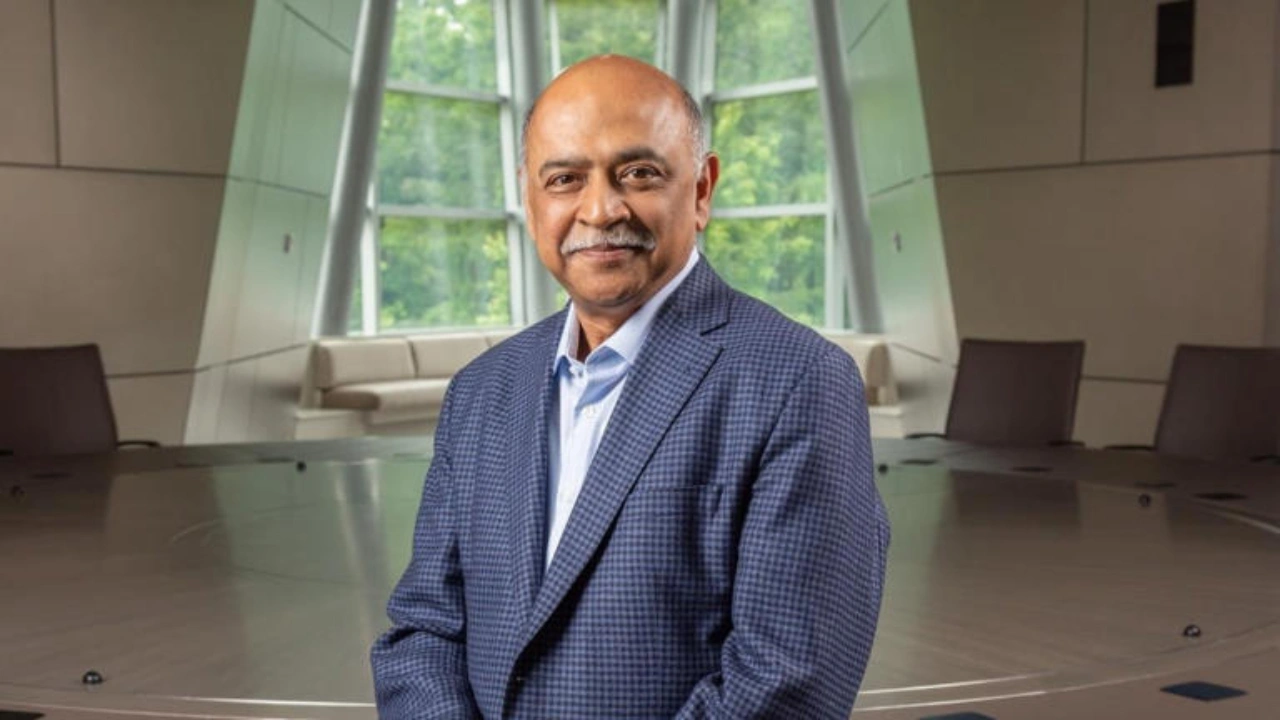
IBM CEO
Fears around artificial intelligence replacing human jobs are growing louder—and according to IBM CEO Arvind Krishna, those concerns are not without merit. While Krishna remains optimistic about AI-driven economic growth and job creation in the long term, he has openly acknowledged that several existing roles are likely to shrink or disappear as AI adoption accelerates.
Speaking in a recent interview with Bloomberg, Krishna outlined the types of jobs most exposed to automation and explained why reskilling the workforce will be critical in the coming years. His comments offer a rare, candid view from the head of one of the world’s largest technology companies on how AI could reshape employment.
Call Centre and Helpdesk Roles Face Major Impact
Among the most vulnerable roles, Krishna highlighted call centre jobs. According to him, advances in conversational AI and automation could significantly reduce the need for human agents over time.
“The call centre jobs, I could easily see 50% of them going away over time,” Krishna said, pointing to AI’s growing ability to handle customer queries, complaints, and routine support tasks with speed and accuracy.
In addition to call centres, internal helpdesk roles—particularly in IT and human resources—are also at risk. These positions often involve resolving repetitive issues, managing tickets, and answering standard questions, all of which are increasingly being handled by AI-powered tools and virtual assistants.
“People who are on internal helpdesks like IT, like HR—I think a number of those will go away,” Krishna noted.
Repetitive Back-Office Jobs Under Pressure
Krishna also warned that roles heavily dependent on repetitive, rule-based work could see significant job losses. This includes positions in finance and accounting that focus on document verification, data matching, and reconciliation.
“If I look at jobs that are simply doing matching of documents to make sure that they’re the same—like what happens in accounts payable and accounts receivable—I could see half of those going away,” he explained.
AI systems excel at such structured tasks, often performing them faster, with fewer errors, and at a lower cost than humans. As a result, companies may increasingly rely on automation to streamline back-office operations.
Upskilling Is the Key to the Future
Despite these warnings, Krishna stressed that AI does not necessarily mean a net loss of jobs. Instead, he argued that responsibility lies with companies and governments to help workers adapt.
“The onus is on us to make sure we can give workers other skills,” he said, emphasizing the importance of upskilling and reskilling programs.
Krishna believes that while some roles will disappear, new and more productive roles will emerge. Workers displaced by automation, he said, should be supported in transitioning into areas that require creativity, problem-solving, and advanced technical expertise.
Growth in High-Value Roles Like R&D
One of the key areas Krishna identified as a major source of future employment is research and development (R&D). He revealed that IBM itself has increased investment in R&D and hired around 10,000 people in this area.
“There is going to be much more hiring in those areas that are much more productive, like R&D,” he said, adding that overall job creation in such fields could outweigh losses caused by automation.
According to Krishna, the “net increase” in jobs driven by innovation and productivity gains will more than offset the displacement caused by AI.
IBM’s Own AI-Driven Transformation
Arvind Krishna took over as CEO of IBM in 2020 and has since led a major transformation of the company. IBM has been steadily moving away from legacy businesses and focusing on high-growth segments such as generative AI, hybrid cloud computing, and software-driven services.
AI is already reshaping IBM’s internal operations. Krishna has previously revealed that AI tools have taken over work equivalent to around 200 human resources employees, highlighting how quickly automation is being adopted even within tech companies.
As AI continues to evolve, Krishna’s message is clear: disruption is inevitable, but with the right skills and strategic investment, the future of work can still be one of opportunity rather than loss.
About the Author