BlackRock
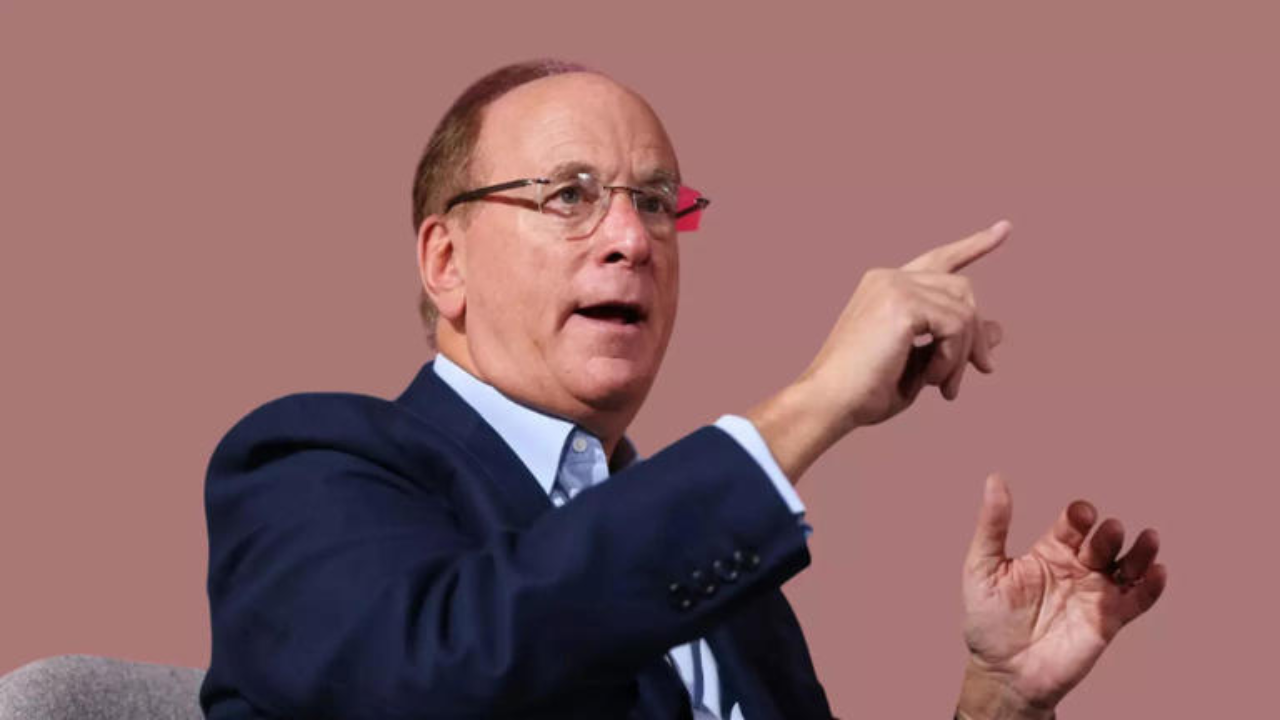
India is stepping into a defining chapter of its economic evolution—one where domestic investors, not foreign capital, will increasingly drive long-term growth. This was the clear message from Larry Fink, CEO of BlackRock, the world’s largest asset management firm, who recently shared the stage with Reliance Industries chairman Mukesh Ambani at a JioBlackRock event.
Fink expressed strong confidence in India’s future, stating that the coming 20 to 25 years will belong to the country. According to him, India’s unique combination of scale, digital infrastructure, demographic strength, and growing financial awareness positions it as one of the most compelling long-term investment destinations globally. He emphasised that India’s growth story is now mature enough to be powered from within, rather than relying heavily on volatile foreign capital flows.
At the centre of BlackRock’s India thesis is the belief that the country must significantly expand household participation in capital markets. Fink highlighted that hundreds of millions of Indians still remain outside formal investing, and unlocking this potential could fundamentally transform the nation’s economic trajectory. Whether it is artificial intelligence, infrastructure development, advanced manufacturing, or emerging service sectors, India’s future growth will depend on how deeply its citizens participate as investors.
As domestic investment grows, India’s economic engine will become more resilient. Fink noted that greater reliance on local capital can help insulate the country from global shocks and reduce vulnerability to sudden foreign outflows. A broader investor base would not only stabilise markets but also ensure that wealth creation is shared more widely across society.
Addressing concerns around new technologies, Fink dismissed fears of an artificial intelligence bubble. While acknowledging that some companies may fail, he described such outcomes as a natural part of capitalism. According to him, innovation always comes with both major successes and failures, and AI remains a transformational force rather than a speculative excess.
Mukesh Ambani, speaking at the same event, offered insights into how BlackRock decided to re-enter India through a partnership with Jio Financial Services. He revealed that the collaboration took shape remarkably quickly, beginning with what was initially just a brief meeting. That conversation eventually evolved into one of the most significant global partnerships in India’s asset management sector.
The outcome was the formation of JioBlackRock, a 50:50 joint venture announced in July 2023. Both companies committed up to $150 million each, signalling a long-term strategic intent rather than a short-term market play. The venture aims to build a digital-first asset management platform designed specifically for India’s rapidly expanding base of retail investors.
By combining Jio’s extensive digital reach with BlackRock’s global investment expertise, the platform seeks to make investing more accessible, transparent, and affordable for millions of Indians. The focus will be on simplifying investment products and using technology to lower entry barriers for first-time investors.
For BlackRock, India is no longer viewed as just another emerging market opportunity. It has become a core pillar of the firm’s global strategy. The asset manager closed 2025 with record assets under management of $14.04 trillion, reinforcing its scale and influence in global finance. Even amid worldwide economic uncertainty, India continues to stand out as a market where long-term capital can compound sustainably.
Fink has repeatedly argued that the global investment environment is undergoing a structural shift. As geopolitical uncertainty begins to ease, capital is increasingly flowing toward economies that offer durable growth rather than cyclical gains. In that context, India’s expanding investor culture, digital transformation, and economic ambition place it firmly at the centre of the next global growth cycle.
About the Author