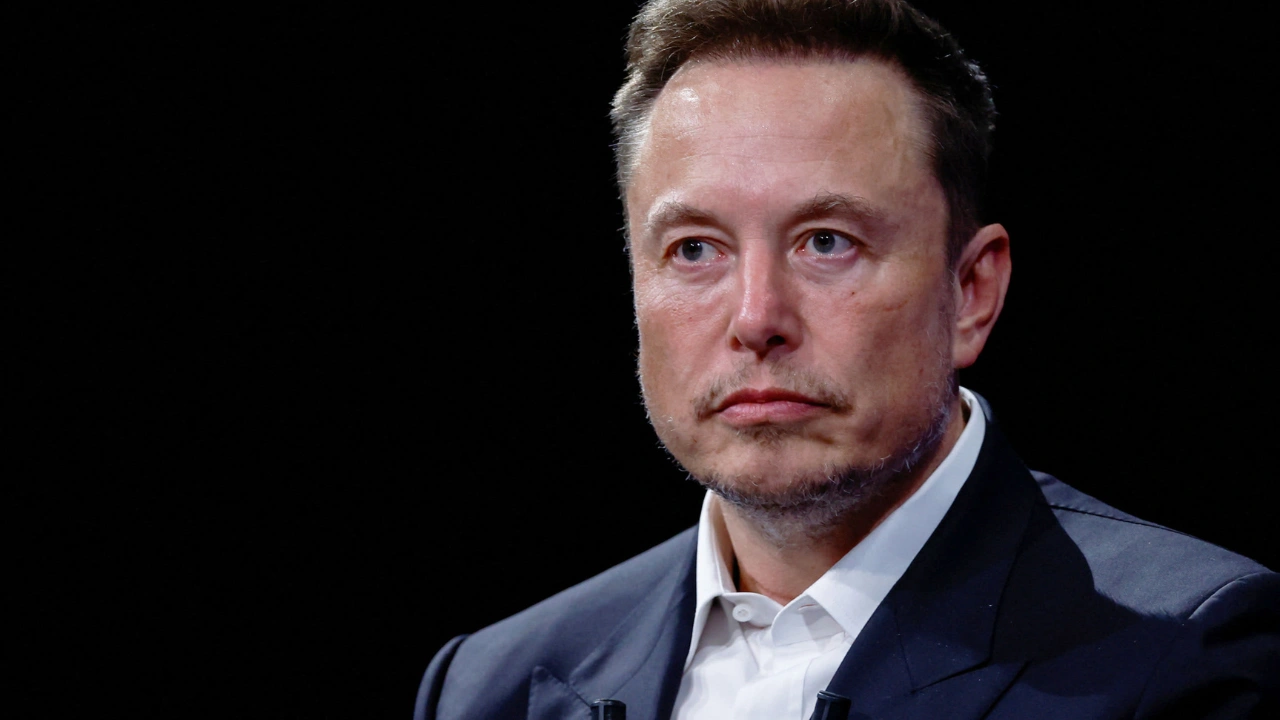
Elon Musk
Tesla CEO Elon Musk has announced that the electric vehicle maker will bring production of its long-standing Models S and X to an end, marking a significant strategic shift for the company. The decision comes at a time when Tesla has reported its first-ever annual revenue decline, highlighting the challenges the automaker faces amid intensifying global competition and a rapidly evolving technology landscape.
Speaking during Tesla’s fourth-quarter earnings call on January 28, Elon Musk described the move as an “honorable discharge” for the two premium electric vehicles. He encouraged enthusiasts and loyal customers to place their orders soon, as remaining inventory is expected to sell out once production ceases.
“It’s time to basically bring the Model S and X programs to an end with an honorable discharge. If you’re interested in buying a Model S and X, now would be the time to order it,” Musk said during the call, as reported by CNBC.
According to Musk, Tesla plans to repurpose its Fremont, California factory—currently used for producing the Model S and Model X—to focus on manufacturing the company’s humanoid robot, Optimus. This move signals a broader transformation in Tesla’s priorities, as it increasingly positions itself not just as an automaker, but as an artificial intelligence and robotics company.
Why Tesla is ending Models S and X
Launched in 2012 and 2015 respectively, the Model S sedan and Model X SUV are among Tesla’s oldest vehicles, alongside the original Roadster. With base prices hovering around $95,000 for the Model S and nearly $100,000 for the Model X, both models sit firmly in the premium segment of Tesla’s lineup.
Over recent years, Tesla has repeatedly cut prices on these vehicles in response to rising competition in the global EV market, particularly from Chinese and European manufacturers. Despite these efforts, the Models S and X now account for a relatively small share of Tesla’s overall sales.
In contrast, Tesla’s more affordable Model 3 and Model Y dominate the company’s delivery figures. Priced at approximately $37,000 and $40,000 respectively for base variants, the two models accounted for nearly 97% of Tesla’s total deliveries in 2025, or about 1.59 million vehicles. This shift in consumer preference has made it increasingly difficult for Tesla to justify continued production of its higher-priced legacy models.
Financial pressure and revenue decline
The announcement comes against the backdrop of Tesla’s first recorded annual revenue decline. According to a Reuters report, the company’s revenue fell by around 3% in 2025 to approximately $94.83 billion. While Tesla posted adjusted earnings per share of 50 cents in the fourth quarter—beating Wall Street expectations of 45 cents—its net income dropped sharply by 61% to $840 million during the same period.
The mixed financial picture underscores the challenges Tesla faces as it balances slowing EV demand in some markets, price wars, and heavy investments in future technologies.
Optimus robots take center stage
Tesla’s growing focus on humanoid robots was a recurring theme during the earnings call. Musk reiterated that the company sees driverless vehicles and humanoid robots as its long-term future, even though both areas currently generate little to no revenue.
Tesla plans to unveil the third-generation design of its Optimus robot this quarter, with Musk describing it as a version “meant for mass production.” He revealed that the production lines previously used for the Model S and X would be converted to support Optimus manufacturing, with an ambitious target of producing up to one million units per year.
“Because it is a completely new supply chain, there’s really nothing from the existing supply chain that exists in Optimus,” Musk said. He added that Tesla would increase headcount at the Fremont facility and significantly ramp up output as it scales robot production.
Tesla’s push into chip manufacturing
In addition to robotics, Musk also highlighted Tesla’s growing concern over semiconductor supply. During the earnings call, he said the company may need to build its own semiconductor manufacturing facility—referred to as a “TeraFab”—to avoid future supply constraints.
According to Bloomberg, Musk explained that such a facility would produce logic chips, memory, and packaging domestically. Tesla currently sources chips from companies such as Micron Technology, Samsung Electronics, and Taiwan Semiconductor Manufacturing Company (TSMC).
Musk warned that geopolitical risks could pose serious challenges to global chip supply chains in the coming years, making domestic manufacturing a strategic necessity.
As Tesla retires two of its most iconic vehicles, the company appears to be betting its future on artificial intelligence, autonomous driving, robotics, and vertical integration—signaling a bold, and risky, new chapter in its evolution.
About the Author